Month In Review South Korea in January 2025: A month in review and what’s aheadAn analytical look at the main developments from January 1 to 31, 2025, and key outlook for February 2025 
Table of Contents
Executive Summary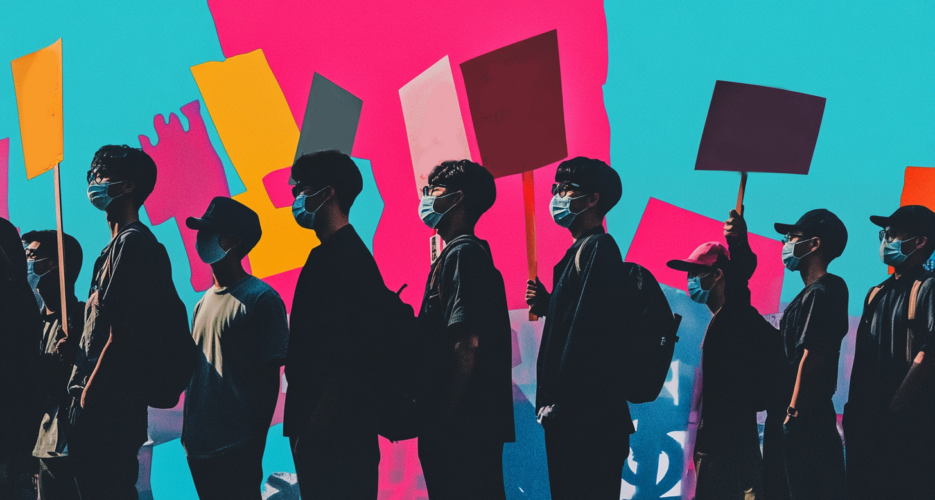 Illustration of young protestors in Seoul | Image: Korea Pro In South Korean domestic politics and government in January, President Yoon Suk-yeol became the first incumbent president to be arrested and indicted, following his December martial law declaration. The Constitutional Court began impeachment proceedings, while right-wing protests turned violent in Seoul. Despite the turmoil, the conservative People Power Party (PPP) is gaining in the polls, flipping the Democratic Party’s (DP) lead in some polls. South Korea’s economy and finance showed mixed signals this month, with the Bank of Korea (BOK) maintaining its 3% benchmark rate amid global volatility and domestic political uncertainty. The central bank lowered GDP growth forecasts to 1.6 to 1.7% for 2025, down from 2% in 2024. While consumer confidence rebounded slightly to 91.2 after a major drop in December, it remained below the long-term average, reflecting persistent pessimism. In trade and business, South Korean exports faced challenges in January, with overall exports declining year-on-year despite a surge in semiconductor exports. While South Korea secured an AI technology export exemption from the outgoing Biden administration, the new Trump administration’s “America First” policies poses risks. Notable developments included Samsung and LG considering relocating their manufacturing plants from Mexico to the U.S., and the resolution of a nuclear power plant dispute between Korea Hydro and Nuclear Power (KHNP) and Westinghouse Electric. In foreign relations, South Korea focused on managing its alliance with the U.S. and preparing for shifting policies under the Trump administration. Trump’s defense secretary, Pete Hegseth, and Trump himself described North Korea as a “nuclear power,” which reignited nuclear armament debates in Seoul. Meanwhile, talks with Japan continued despite Yoon’s impeachment and arrest. South Korea also opened an embassy in Cuba, marking a milestone after the two countries established diplomatic ties last year. In defense and security, South Korea’s military underwent significant shakeup following December’s martial law incident, with four senior commanders dismissed. Concurrently, the country faced major cybersecurity challenges, including a court system data breach and North Korea’s $600 million cryptocurrency theft. Meanwhile, the country advanced its defense capabilities with L-SAM-II missile development and potential K-9 Howitzer exports to Vietnam. In society and culture, families of the Jeju Air crash victims called for a transparent investigation into the tragedy. Meanwhile, South Korea announced healthcare reforms targeting non-reimbursed treatments to sustain the National Health Insurance Service, while labor unions protested increases in foreign worker visas for the shipbuilding industry. Also in January, Instagram introduced teen safety features in the country. Edited by John Lee 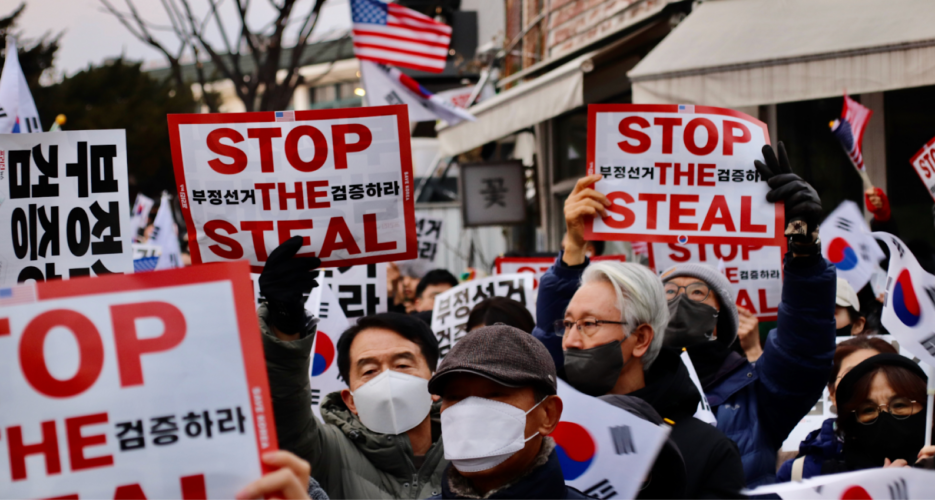 Pro-Yoon protestors hold up “Stop the Steal” signs, Jan. 19, 2025 | Image: Korea Pro
Politics and Governance
PUBLIC SENTIMENT In January, public sentiment trends saw significant shifts. Party approval rate: Overall, the conservative base consolidated throughout the month. The PPP consistently gained support in all three of South Korea’s major polls — Gallup Korea, Realmeter and the National Barometer Survey (NBS).
Presidential approval rate: Three major pollsters excluded questions about Yoon’s job performance (approval rate) after the National Assembly’s impeachment led to his suspension, but some minor polls showed Yoon’s approval ratings exceeding 40% post-martial law. Experts caution against interpreting these as direct approval ratings, suggesting they reflect the size of conservative support instead. Impeachment sentiment polls: At the end of January, Gallup Korea and NBS showed that the majority of South Koreans believe the Constitutional Court should remove Yoon from office. However, anti-impeachment sentiment gradually grew throughout the month. Regime change sentiment: Although support for regime change is higher than support for maintaining the status quo, support for the former consistently went down throughout the month. A Realmeter poll showed that support for a DP presidency went down from 60.4% to 49.1%, while support for the PPP to retain the presidency went up from 32.3% to 46%. Gallup Korea and NBS showed similar results. PARTY POLITICS Changes in conservative party leadership: The PPP underwent leadership changes amid internal divisions over Yoon’s impeachment. Former unification minister and five-term lawmaker Kwon Young-se took charge of the interim leadership committee. However, pro-Yoon lawmakers, including former party leader Kim Gi-hyeon, rallied around Yoon. DP’s Lee Jae-myung faces more trials: On Jan. 23, the Seoul High Court began main opposition leader Lee Jae-myung’s appeals trial for violating the Public Official Election Act. The High Court plans to hold a final argument session on Feb. 26, with media expecting a ruling by late March or early April. However, Lee in late January has sought a constitutional review of the election law, which, if accepted by the Constitutional Court, could delay proceedings. Minor opposition party feud: The New Reform Party is experiencing internal strife, with leader Heo Eun-ah and lawmaker Lee Jun-seok engaging in a public dispute over party governance. Cho Kuk arrested: Following the imprisonment of Rebuilding Korea Party founder and leader, Cho Kuk, in late December, Kim Sun-min assumed the role of acting party leader. Cho’s vacated parliamentary seat was filled by Paik Sun-hee, a birth rate and gender expert. LEGISLATIVE UPDATES Amendment to the Aviation Business Act: Passed on Jan. 8, this legislation enhances protections for airline passengers, including stricter accountability for delays and cancellations caused by unforeseen circumstances. The bill also mandates regular audits of fare transparency and advertising accuracy. The Ministry of Land, Infrastructure and Transport will oversee enforcement. It was sent to the government to deliberate on Jan. 17. Corporate Research and Development Support Act: Passed on Jan. 8, this act separates corporate research and development (R&D) provisions from broader laws to improve management and incentivize innovation. It introduces clearer definitions for corporate research institutes and enhanced support for research personnel and infrastructure. Special Prosecutorial Investigation against Yoon: Passed after modification on Jan. 17, this law establishes a special prosecutor to investigate Yoon’s martial law declaration. The special prosecutor has broad authority, including appointing up to 60 investigative staff and 30 prosecutors. However, during deliberation at the plenary session, the clauses about Yoon’s alleged crimes of inciting foreign aggression (외환의 죄) was deleted. Acting President Choi vetoed the bill at the end of January. will deliberate whether to veto it after the Lunar New Year holidays. GOVERNANCE Choi Sang-mok continues as acting president: Following the impeachment of both Yoon and former Prime Minister Han Duck-soo, finance minister Choi Sang-mok assumed the role of acting president at the end of December. This month, despite vetoing several bills, Choi avoided impeachment. LOOKING AHEAD In February, South Korea faces several critical moments that will shape its political trajectory. The Constitutional Court’s plea dates for Yoon’s impeachment trial could permanently alter the country’s leadership. Many legal experts expect a ruling by late February or March given the case’s urgency, although Yoon’s continued silence may drag the trial further. All eyes will be on public opinion polls in February as they could preview voter sentiment ahead of a potential presidential election. If Yoon is removed from office, South Korea would need to hold a new presidential election within 60 days of the Court’s ruling, making the narrowing gap between the PPP and DP support increasingly significant. For the bureaucracy, February presents unprecedented challenges as ministries must continue operations while preparing for multiple scenarios — either Yoon’s reinstatement or removal. Edited by John Lee 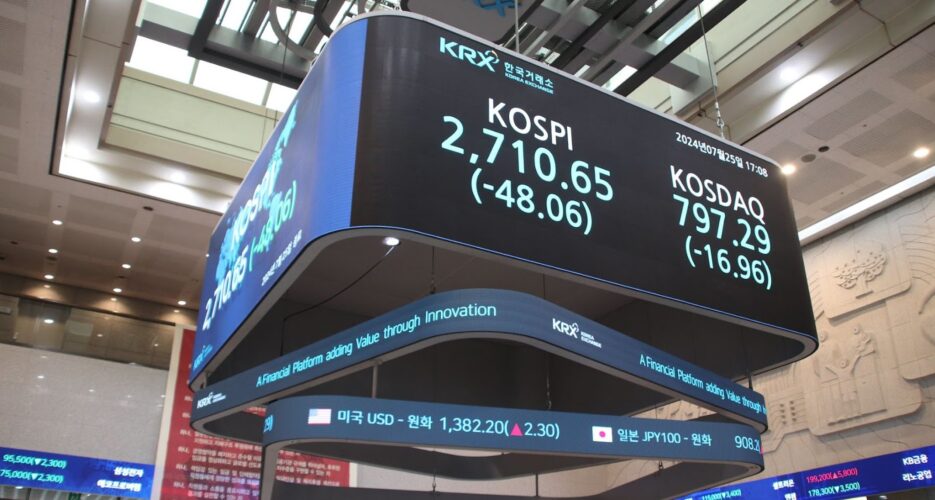 Korea Exchange, July 25, 2024 | Image: Korea Pro
Economy and Finance
PUBLIC SENTIMENT Consumer confidence rebounds but remains fragile: The Composite Consumer Sentiment Index rose to 91.2 in January, recovering from a low of 88.2 in December. Despite the uptick, the index remains well below the long-term average of 100, indicating persistent consumer pessimism. Optimism about future economic conditions drove the gain, but sentiment around current conditions remained weak, with an index score of 51. Political uncertainty, including the Constitutional Court’s pending ruling on President Yoon Suk-yeol’s impeachment, has tempered consumer confidence. Inflation expectations easing slightly: Inflation rose by 1.9% in Dec. 2024, driven by higher oil prices, but expectations for 2025 eased to 2.8%. Policymakers are closely monitoring energy prices and currency fluctuations to prevent inflationary pressures from eroding household purchasing power further. POLICY DECISIONS Infrastructure investments for long-term growth: The government announced plans in Dec. 2024 to accelerate renewable energy projects and digital infrastructure development. These initiatives aim to generate short-term economic activity while positioning South Korea for long-term competitiveness in emerging technologies. Reforms to Saemaeul Geumgo: The South Korean government introduced reforms to Saemaeul Geumgo — South Korea’s largest mutual credit institution. The reforms are aimed at addressing operational inefficiencies and bolstering oversight. These changes include stricter audit requirements and enhanced transparency measures to prevent financial mismanagement. Labor market challenges: Job growth continues to lag, with structural issues such as an aging workforce and skill mismatches hampering recovery. The Ministry of Economy and Finance has proposed reskilling programs and plans to attract skilled foreign workers, particularly in technology and healthcare. These measures are intended to alleviate labor shortages and support sustainable growth. Balancing fiscal prudence with stimulus: Continuing political standoffs in January over fiscal priorities have delayed critical legislation. While the opposition advocates for expanded welfare programs and aggressive economic stimulus, the administration prioritizes debt sustainability. The impasse risks undermining confidence in South Korea’s economic management. RISKS AND OPPORTUNITIES Risks
Opportunities
INVESTOR WATCHLIST FOR FEBRUARY
LOOKING AHEAD February is expected to bring critical developments that could reshape South Korea’s economic trajectory. The Constitutional Court’s anticipated ruling on Yoon’s impeachment trial will have significant implications for governance and policy continuity. Policymakers face mounting pressure to resolve political gridlock and implement measures to address immediate challenges, including labor market vulnerabilities and public dissatisfaction over health reforms. Externally, South Korea must navigate evolving trade dynamics under the Trump administration while managing risks from global economic deceleration. Targeted interventions in strategic industries and proactive engagement with key partners will be crucial in sustaining growth. Edited by Alannah Hill
Business and Trade
BUSINESS SENTIMENT Business confidence: Corporate sentiment reflected a mixed outlook amid political and trade uncertainties. According to the Federation of Korean Industries, major South Korean companies anticipate a modest 1.4% increase in exports for 2025 compared to 2024, signaling cautious optimism. However, the Business Survey Index for January registered at 84.6, underscoring persistent concerns about economic conditions. Readings below 100 indicate pessimism. Smaller firms, particularly those reliant on Chinese markets, voiced deeper concerns over supply chain disruptions and declining demand, highlighting the uneven sentiment across business sectors. Stakeholder reactions to trade policies: South Korea’s Trade Change Response Act, implemented in January to address global trade shocks, has broadened its scope to include businesses affected by agreements like the Indo-Pacific Economic Framework. The law’s provisions include lowering the threshold for support eligibility to a 5% decline in sales or production, down from the previous 10%. Export-heavy industries, particularly the semiconductor and automotive sectors, view the law as a critical step in bolstering global competitiveness. However, small- and medium-sized enterprises have expressed concerns, advocating for more direct financial assistance to cope with immediate trade disruptions and compliance costs. POLICY DECISIONS Government support for strategic sectors: The government expanded R&D tax credits for high-tech exporters, including semiconductor and hydrogen energy firms, as part of its broader push to strengthen competitiveness in strategic industries. Infrastructure initiatives focused on supply chain resilience were also announced in January, targeting logistics hubs and renewable energy storage. Standardization efforts in emerging technologies: South Korea’s push for leadership in technology standards took a significant step forward in January. The government outlined plans to collaborate with international bodies on standards for artificial intelligence and quantum technologies, positioning the country as a global hub for innovation. Trade diversification strategies: Efforts to reduce dependency on Chinese markets have intensified. The government prioritized partnerships with ASEAN nations and deeper trade ties with the U.S. and the EU. Key initiatives include expanding market access for South Korean manufacturers and fostering joint ventures in clean energy and advanced manufacturing. CORPORATE DEALS AND ANNOUNCEMENTS
LEGAL DEVELOPMENTS
RISKS AND OPPORTUNITIES Key Risks
Emerging Opportunities
LOOKING AHEAD February will be critical for South Korea’s trade and business outlook. Key updates include January trade data, post-Lunar New Year recovery trends and announcements on infrastructure investments. U.S.-South Korea trade relations under the Trump administration will also require close monitoring, particularly in AI and automotive sectors. Additionally, progress in FTA negotiations with ASEAN and policy adjustments in key export industries will shape investor sentiment and business strategies. Edited by Alannah Hill 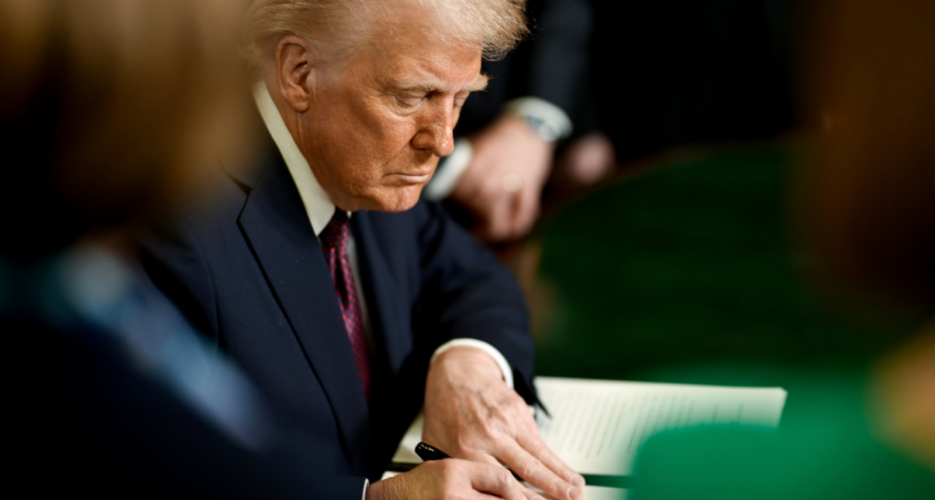 U.S. President Donald Trump signs an executive order, Jan. 20, 2025 | Image: White House
Foreign Relations
BILATERAL TIES U.S.-ROK alliance under new leaders: The alliance faced new challenges following Trump’s inauguration. Acting President Choi Sang-mok expressed hopes for more reciprocal ties under the Trump administration. However, Trump’s reference to North Korea as a nuclear power clashed with South Korea’s commitment to denuclearizing North Korea. Japan relations: On Jan. 13, South Korea’s foreign minister Cho met with his Japanese counterpart, Takeshi Iwaya, in Seoul to discuss coordinated security responses to North Korea and the resumption of economic cooperation. The meeting marked a step toward continuing improvements in bilateral relations — despite Yoon’s suspension from duties — and pledging to sustain trilateral security cooperation with the U.S. Meanwhile, Seoul and Tokyo are preparing to commemorate the 60th anniversary of normalized diplomatic relations this year. ROK Embassy in Cuba: Eleven months after a breakthrough deal to establish formal diplomatic ties last year, South Korea opened an embassy in Cuba. The inauguration ceremony, held on Jan. 17, was attended by officials from both countries, pledging advanced cooperation in fields such as energy, health and agriculture. However, Marco Rubio’s appointment as the new U.S. Secretary of State could limit Seoul from deepening its nascent ties with Havana. MULTILATERALS U.S.-ROK-Japan: On Jan. 3, Acting President Choi reaffirmed South Korea’s commitment to trilateral cooperation with the U.S. and Japan amid concerns that a potential new progressive administration may backtrack Seoul’s relations with Tokyo. Before leaving office, former U.S. President Joe Biden highlighted the importance of the trilateral partnership as a cornerstone of regional stability. First Quad meeting under Trump: While Trump has not made any public remarks about the Quadrilateral Security Dialogue, Rubio met with his counterparts from Australia, India and Japan on Jan. 21.The group’s joint statement emphasized a continued commitment to a “free and open” Indo-Pacific, stating they strongly oppose “any unilateral actions that seek to change the status quo by force or coercion” — a likely reference to China’s sovereignty claim over Taiwan. There, Japan raised the issue of North Korea’s nuclear threat. LOOKING AHEAD The ROK-Africa Critical Minerals Dialogue, established during a June 2024 summit and slated to be held in February, represents one of Yoon’s key initiatives in fostering comprehensive cooperation between South Korea and African nations. South Korea committed to expanding development aid to African nations, with plans to increase its official development assistance (ODA) by 2030 and provide funding for export financing to facilitate South Korean companies’ entry into African markets. From Feb. 20 to 21, the first G20 Foreign Ministers’ Meeting for the November Johannesburg summit will be held in South Africa. While South Korea’s Ministry of Foreign Affairs has included this event on its official diplomatic schedule, it remains unclear whether foreign minister Cho Tae-yul will attend. The annual Munich Security Conference (MSC) from Feb. 14 to 16 will be closely watched for South Korea’s potential participation. Last year, foreign minister Cho’s last-minute decision to skip the event sparked domestic political controversy. North Korea has been excluded from the MSC’s invite list since 2023 after it dropped out in 2020 citing COVID-19 risks. Edited by John Lee 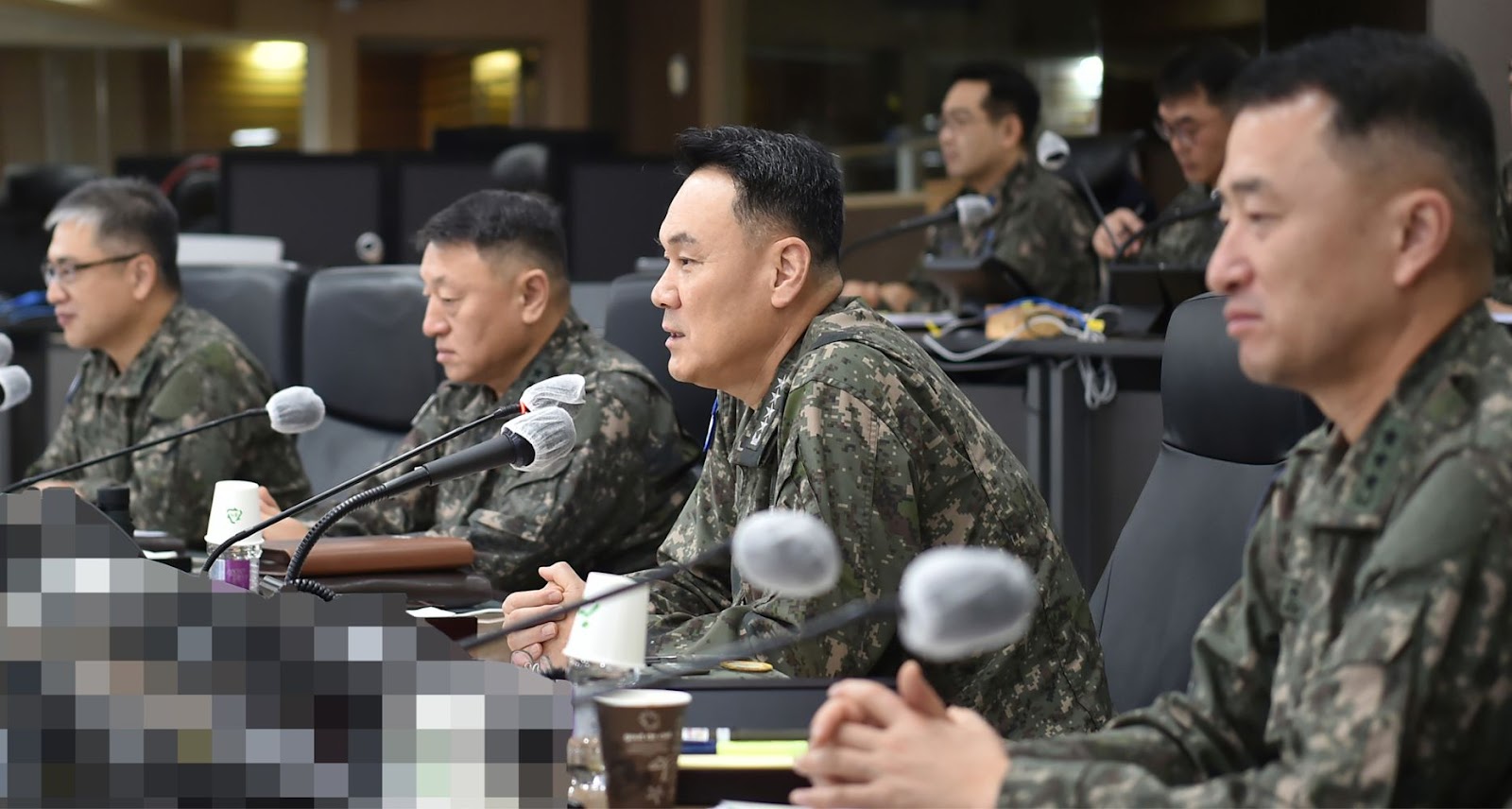 Admiral Kim Myung-soo, the chairman of the ROK Joint Chiefs of Staff, inspects the military’s readiness posture, Jan. 1, 2025 | Image: ROK Joint Chiefs of Staff
Defense and SecurityKEY DEVELOPMENTS 2025 defense policy layout: In January, Seoul’s defense ministry released its 2025 work plan, vowing to focus on rebuilding public trust and addressing military morale amid backlash over its role in executing Yoon’s martial law declaration on Dec. 3, 2024. The work plan maintains the military’s central role of defending the country from North Korea, with plans to maintain the “three-axis” defense systems. Key initiatives include launching two military reconnaissance satellites to improve surveillance and beginning mass production of the L-SAM missile interceptor. However, the tone of the plan reflects a subtle shift. The defense ministry softened its language by removing phrases such as “respond immediately, powerfully and to the end” — a slogan popularized by the Yoon administration slogan. The ministry replaced the phrase with “respond immediately and overwhelmingly.” However, the work plan retains the Yoon administration’s objective of strengthening the U.S.-ROK alliance and trilateral cooperation with Washington and Tokyo. Simulations and tabletop exercises simulating hypothetical North Korean nuclear attacks also remain part of the ministry’s strategy. L-SAM-II begins development: Following the successful completion of the L-SAM in Dec. 2024, South Korea’s Defense Acquisition Program Administration (DAPA) has announced plans to develop the advanced L-SAM-II missile defense system. Designed to intercept missiles at altitudes exceeding 60 kilometers — an improvement over the 40 to 60 kilometer range of its predecessor — the L-SAM-II will enhance South Korea’s multi-layered Korea Air and Missile Defense (KAMD) network. The project is slated for completion by 2028 and will integrate with existing systems to provide a comprehensive defense strategy. Trilateral air drills and more: The U.S., South Korea and Japan held their first trilateral exercise of the year this month, as two U.S. B-1 Lancer strategic bombers joined fighter jets from Seoul and Tokyo in a show of force a day after North Korea launched “several” short-range ballistic missiles on Jan. 14. It marked the first time the U.S. supersonic strategic bomber participated in such air drills since November. Meanwhile, on the same day, U.S. and ROK fighter jets conducted a joint air-to-ground live-fire training exercise. The two country’s air forces also came together to participate in the annual Buddy Squadron drills this month. ROK dismisses commanders linked to martial law: South Korea’s military officially dismissed in January four senior commanders — Lieutenant General Yeo In-hyung, Major General Moon Sang-ho, Lieutenant General Lee Jin-woo and Lieutenant General Kwak Jong-keun — for their involvement in Yoon’s martial law declaration. The Ministry of National Defense is also reviewing possible disciplinary actions for Army Chief of Staff General Park An-su, who served as the martial law commander. All five military figures have been suspended and face legal proceedings. Military official sentenced for espionage: On Jan. 21, a South Korean military intelligence official was sentenced to 20 years in prison for leaking sensitive information about South Korean undercover agents to a suspected Chinese agent in exchange for bribes. The 45-year-old civilian employee at the Korea Defense Intelligence Command was convicted of providing personal details of “black agents” operating overseas, posing a serious threat to their safety and undermining intelligence operations, according to a court martial. Military prosecutors revealed the official leaked classified information in 30 instances via documents and voice messages after coming into contact with the alleged Chinese agent during his 2017 arrest at a Chinese airport. DEFENSE INDUSTRY UPDATES K-9 Howitzers to Vietnam: South Korea’s Hanwha Aerospace is in the final stages of securing a $276 million (400 billion won) deal to export 20 to 30 K-9 Thunder self-propelled howitzers to Vietnam, potentially marking the Southeast Asian country’s first procurement of ROK-made weaponry. Vietnam’s interest in the K-9 is attributed to its territorial disputes with China, particularly in the South China Sea, and aligns with other regional moves to bolster defense capabilities, such as the Philippines’ expected acquisition of additional South Korean FA-50 fighter jets. If finalized, Vietnam would become the 11th nation to adopt the K9, joining countries like Poland, Australia and India. Hanwha has sold over 1,300 units globally, capturing more than 50% of the self-propelled howitzer market. The integration of domestically made engines is expected to facilitate further exports, with the Middle East identified as the next key market. Despite this market expansion, South Korea’s defense industry exports totaled $9.5 billion (13.83 trillion won) in 2024, reaching only half of the target goal. Development of ROK’s own homegrown Iron Dome: In January, DAPA announced the development of a new low-altitude missile defense system to protect against North Korea’s long-range artillery, similar to Israel’s “Iron Dome.” The system, set for completion by 2028, will defend critical national and military facilities in the Seoul metropolitan area. Unlike the Iron Dome, which targets short-range rockets, the new system is designed to intercept a larger number of simultaneous threats. The Agency for Defense Development (ADD) will lead the project, utilizing its expertise in systems integration and fire control technologies. With an estimated cost of $330 million (479.8 billion won), the defense system will be developed to target threats at altitudes up to 12 kilometers, specifically aimed at North Korean artillery shells, which typically travel below 20 kilometers. CYBERSECURITY U.S., ROK and Japan announce DPRK crypto-theft: The U.S., South Korea and Japan confirmed that North Korea stole over $600 million in cryptocurrency in 2024 to fund its nuclear and missile programs. In a joint statement on Jan. 14, the three countries stressed the ongoing cyber threats posed by North Korea, including the activities of cybercriminal groups like Lazarus and remote IT workers. The statement urged blockchain and freelance platforms to adopt better security measures to prevent North Korean infiltration, highlighting the importance of increased public-private sector collaborations. South Korea fines court administrator over North Korean data breach: The Personal Information Protection Commission (PIPC) has fined the national court administrator $140,000 for a breach linked to North Korean cybercriminals that resulted in the theft of over one terabyte of citizens’ personal data. The breach, occurring between 2021 and 2023, exposed sensitive information due to poor cybersecurity practices, including unencrypted data and weak passwords. The PIPC also criticized the court administrator for failing to report the breach until Dec. 2023. LOOKING AHEAD Acting Defense Minister Kim Seon-ho has stressed the importance of restoring public trust in South Korea’s military by steadfastly fulfilling its core mission. In his “First Leadership Letter” issued ahead of the Lunar New Year, Kim called for concerted efforts to rebuild confidence in the armed forces. The South Korean military remains under intense scrutiny following the Dec. 3 martial law controversy, as opposition lawmakers continue to raise allegations of misconduct. The military has vehemently denied accusations of psychological warfare operations aimed at provoking conflict with North Korea. Despite these denials and pledges to rebuild trust, concerns are growing over the prolonged absence of leadership in six top defense positions. Critics warn that the leadership void leaves South Korea vulnerable amid escalating security threats from regional adversaries. Acting President Choi Sang-mok and interim PPP leader Kwon Young-se have called for bipartisan cooperation to swiftly appoint a new defense minister. Edited by John Lee 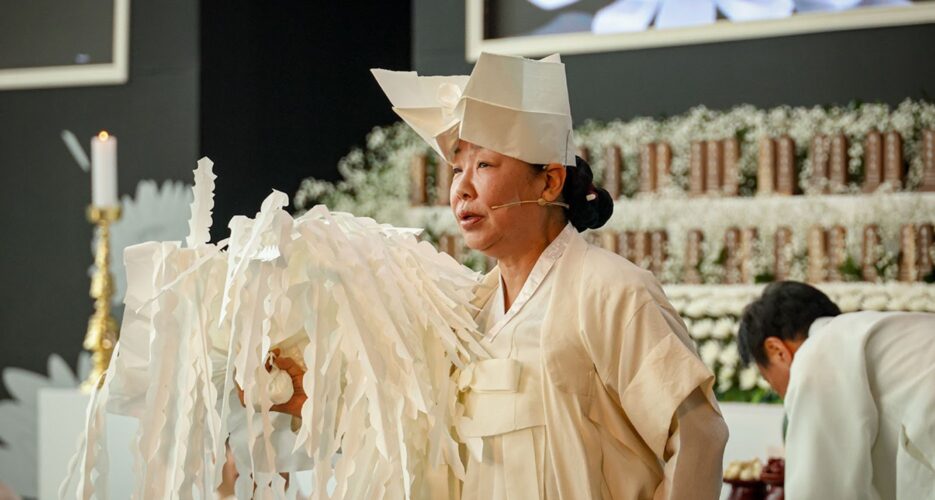 A traditional actor performs a Jindo Ssitgimgut ritual, a traditional performance meant to cleanse and console the spirits of the deceased, at a joint memorial ceremony for the victims of the Dec. 29 Jeju Air crash at Muan International Airport, Jan. 18, 2024 | Image: Democratic Party of Korea
Society and CultureKEY DEVELOPMENTS Jeju Air flight crash tragedy: Families of the Dec. 29 Jeju Air crash victims have called on the government and the Aviation Accident Investigation Board (AAIB) to conduct a transparent and thorough investigation. Speaking at a Jan. 25 briefing, the families expressed trust in the ongoing process. The crash, which occurred as a Jeju Air flight from Bangkok attempted to land at Muan International Airport, claimed 179 of the 181 lives onboard, marking one of South Korea’s worst aviation tragedies. Preliminary findings from the AAIB indicate that bird strikes played a role in the disaster. The AAIB is expected to release a preliminary report in the coming weeks. Meanwhile, families, currently staying in a temporary shelter at the airport, plan to return home following the conclusion of memorial services on Feb. 15. To support ongoing efforts, regional representatives have been selected to coordinate discussions on the investigation and memorial initiatives. Healthcare reforms targeting non-reimbursed treatments: On Jan. 9, South Korea announced healthcare reforms to reduce reliance on non-reimbursed treatments and sustain the National Health Insurance Service (NHIS). Under the plan, non-critical services like manual therapy will require patients to pay 90 to 95% of costs out of pocket. Private health insurance will shift coverage to critical illnesses, such as cancer, while prohibiting combined claims for reimbursed and non-reimbursed care. The reforms aim to ease financial pressure on the NHIS, but concerns remain over their impact on accessibility, especially for the elderly, who frequently use non-critical treatments. Instagram starts teen accounts in ROK: Instagram introduced its Teen Accounts feature in South Korea on Jan. 22 to enhance safety for young users. The feature sets all new accounts for users aged 14 to 18 to private by default and requires parental consent for those under 17 to make their accounts public. Existing accounts for users under 17 will also switch to private unless parents approve otherwise. Teen Accounts restrict direct messages to known contacts, limit sensitive content and allow parents to monitor app usage and interactions. Instagram will hold a press conference on Feb. 11 to share more details about the initiative, launched globally last September. INDICATORS THIS MONTH
SECTORAL DEVELOPMENTS
Other reforms include expanding the Neulbom after-school program to second-grade elementary students, transferring $1.38 billion in university funding to local governments to address regional needs, and increasing childcare support to 120,000 households with a new infant care allowance. While these changes aim to enhance flexibility and address disparities, challenges remain in teacher training, resource distribution and local governments’ capacity to manage university funding effectively. Additionally, the adequacy of childcare support in urban areas is under scrutiny.
Over the past two decades, South Korean women’s employment rate has fallen from 27th in 2003 to 31st in 2023. Similarly, women’s economic participation rate rose slightly from 32nd to 31st. Among OECD countries, South Korea also recorded the lowest employment rate for women with children under 15, at 56.2%, compared to other nations with similar economic profiles. The report highlighted that flexible work environments and family care support in South Korea were less developed compared to high-performing countries like Germany, Japan and the UK.
LOOKING AHEAD South Korea’s birth rate showed a slight uptick in 2024, January data showed. However, the nation’s demographic outlook remains bleak as South Korea joins Japan as a “super-aged” society, with over 20% of the population aged 65 or older. Experts warn that the government must tackle work pressures and improve conditions for women to further boost the country’s birth rate. The aging population is expected to grow rapidly, with projections showing that 37% of the population will be elderly by 2045. Meanwhile, the Jeju Air plane crash at Muan International Airport has exposed serious gaps in South Korea’s aviation safety. With the airport closed temporarily until April, travel, logistics and tourism in the southwestern region will face major disruptions, potentially leading to calls for government fiscal support. The confirmation of a bird strike as a contributing factor has shifted attention to wildlife management at airports, highlighting the need for stronger detection and prevention systems. In sports, 223 South Korean winter sports athletes and staff will participate in the Harbin Asian Winter Games from Feb. 7 to 14. Edited by John Lee
The Month Ahead An illustration of a voter at a crossroad | Image: Korea Pro KEY OUTLOOK: FEBRUARY 2025 February is poised to be a critical month for South Korea’s domestic politics and economic policy directions. The Constitutional Court’s impeachment trial of Yoon will remain at the forefront of political discourse, with potential rulings setting the stage for significant leadership changes. In finance, key developments include whether the government will introduce a supplementary budget to tackle economic challenges, following BOK Governor Rhee Chang-yong’s recommendations in January. Trade policy under the Trump administration will also be monitored closely, especially regarding export financing and currency stability. TOP THREE EVENTS TO WATCH NEXT MONTH
Edited by John Lee © Korea Risk Group. All rights reserved. 
|

October 21, 2026Oct 21, 2026

Never be sidelined again
 SHARE
SHARE COPY LINK
 X
X MASTODON