
Analysis Why South Korea’s political system is fueling institutional conflictGridlock drives calls for constitutional reform, but experts say political self-interest is a major obstacle 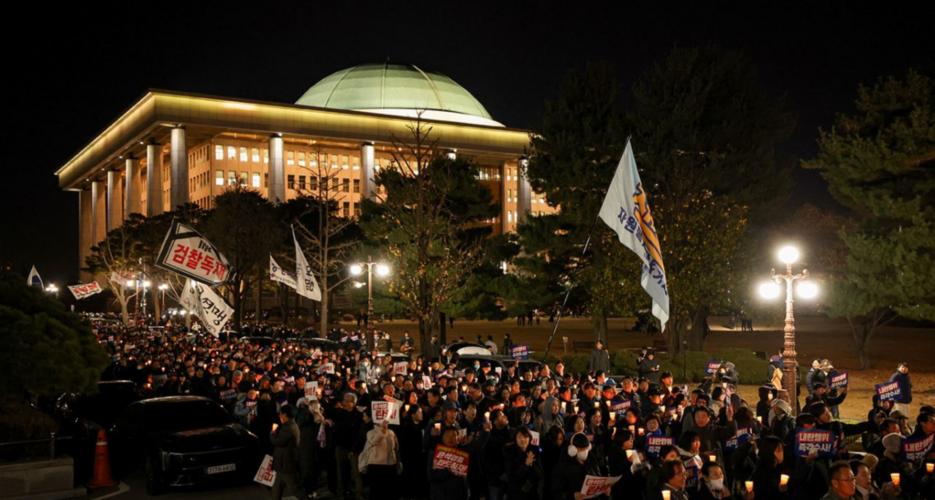 South Korea’s constitutional framework has failed to prevent political gridlock and governance breakdown, culminating in President Yoon Suk-yeol’s Dec. 3 martial law declaration. Designed in 1987 to prevent dictatorship, the current system has instead created a dysfunctional balance of power, where political rivalry between the executive and legislature routinely paralyzes policymaking and fuels partisan conflict. Long before Yoon declared martial law, which ultimately led to his impeachment by a two-thirds majority in the National Assembly, the rivalry between the presidency and the opposition-controlled legislature often escalated into an all-out institutional war, undermining governance and policy continuity. South Korea’s political leaders © Korea Risk Group. All rights reserved. 
|

September 19, 2026Sep 19, 2026

Never be sidelined again
 SHARE
SHARE COPY LINK
 X
X MASTODON