
  
Analysis Modern high-rise apartments come at a price for Seoul’s most vulnerableExperts say appetite for new buildings ignores rights of long-term residents and pushes them to the curb — literally  Even though it was home for over 70 years, truck driver Lee Jong-yeol was forcibly evicted from his central Seoul townhouse in Sept. 2018. After being beaten up by thugs who he says were working for redevelopers and having his possessions sold in what he claims was a mandatory auction. Like many citizens living in older parts of the South Korean capital, Lee’s Ahyeon-dong neighborhood was part of an area earmarked for major redevelopment in the early 2000s. But the redevelopment project led to the forced eviction of many residents like Lee — one of whom even killed himself in protest of the same issue in 2018. Now, adjacent to where an apartment complex called “Mapo The Classy” is nearing completion, Lee lives most of his days in a small truck to protest against what happened to him and his neighbors. Though his story isn’t unique — South Korea has such a lousy record on forced evictions that a United Nations (U.N.) Special Rapporteur expressed deep concern about the issue while visiting Ahyeon-dong in 2018 — it offers a glimpse into the hidden costs of redevelopment in one of Asia’s most powerful economies. 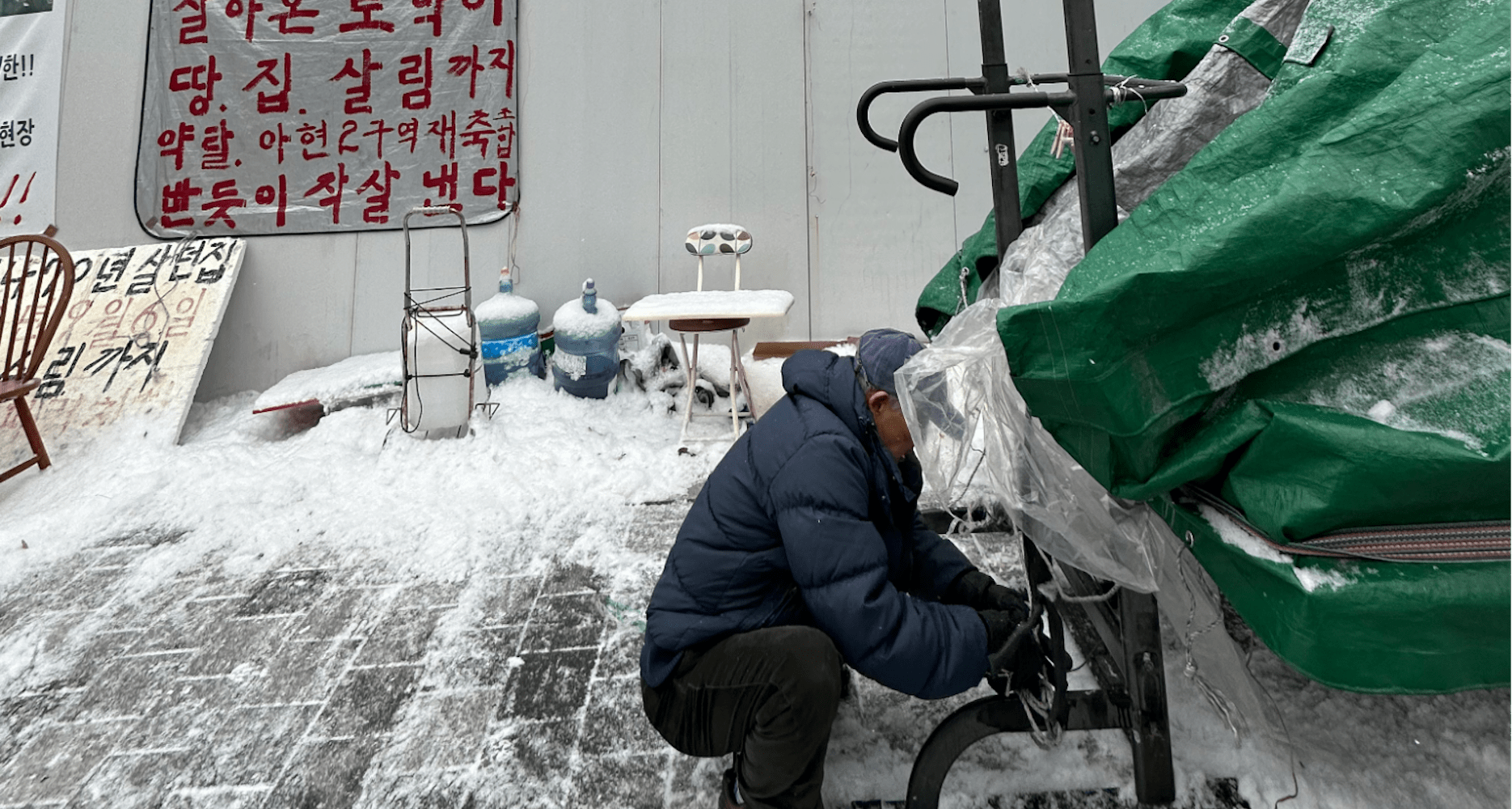 Lee tends to his truck-tent residence on a cold January day | Image: Korea Pro ONE MAN PROTEST “I have asked for help from almost every government agency, such as the National Human Rights Commission of Korea,” Lee explains. “I contacted the police and even sent letters to the presidential office for help.” Though he says he went on hunger strike “for about 30-something days” and even went “up to the top of a construction site [to] threaten to jump off,” he has nothing to show for it. “What I’m demanding is simple, basic human rights,” he explains. “If they took a house from me, I ought to demand one in return.” For a neighborhood to be approved for reconstruction in South Korea, the law requires the consent of at least 75% of the neighborhood’s homeowners. And here, problems begin for those unwilling to leave. When Lee rejected to consent to the reconstruction, he said the Ahyeon District 2 Reconstruction Cooperative — the cooperative in charge of land acquisition and resident migration in the area — filed a land acquisition lawsuit against him. The lawsuit led to the transfer of Lee’s ownership of the house to the cooperative for about $229,000 (297 million won) in compensation. “They hired nine lawyers against me — a single man who cannot fight back. Isn’t this absurd? No wonder I can’t fight them with the law,” Lee said. Today, Mapo The Classy apartments can cost between $775,000 to $1 million (1 to 1.4 billion won). But Lee said the compensation the cooperative offered him was inadequate for the two-story townhouse he owned before, or the land it sat upon. “They offered so little,” Lee said. “I couldn’t get any house or room to myself with that.” When Lee refused to move out, the cooperative sued him, charging him $28,500 (35 million won) in fines. “They sued me for overstaying at my own house and thus for delaying their construction.” 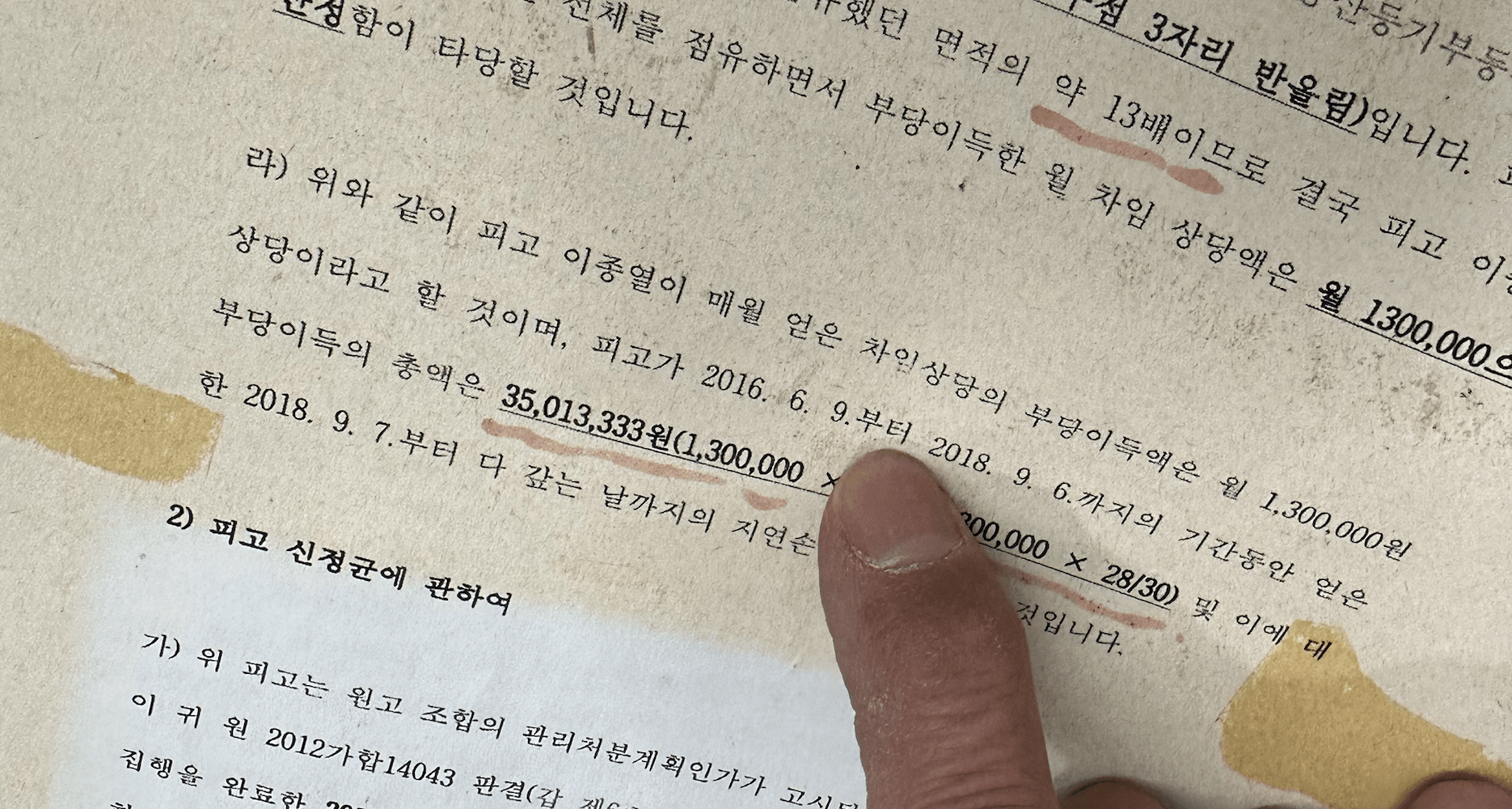 Lee points to the fine he was told to pay for refusing to leave his own home | Image: Korea Pro Lee also said his possessions were forcibly removed and put up for auction, which resulted in $7,300 (9 million won). He said he didn’t accept it. “Let me be clear, I have not received a single penny from them since [the forced eviction] started,” Lee told Korea Pro. “When they came to our neighborhood to force us all out, all of the residents — about some hundred people — gathered to block them,” he explained. “They cursed at us and resorted to physical violence … Once, they dragged me into an empty house and beat me up.” When asked about the use of violence in the process of forced evictions, a member of the reconstruction cooperative said “no violence was used” and that “his claims are all made-up.” Co-developers of Mapo The Classy, HDC Hyundai Development Company and SK Ecoplant, told Korea Pro they were not “involved in the eviction process.” Looking back at what’s happened, Lee said the whole thing left him in shock that South Korea’s legal system could allow something like this to happen. “I keep asking myself: is this just?” 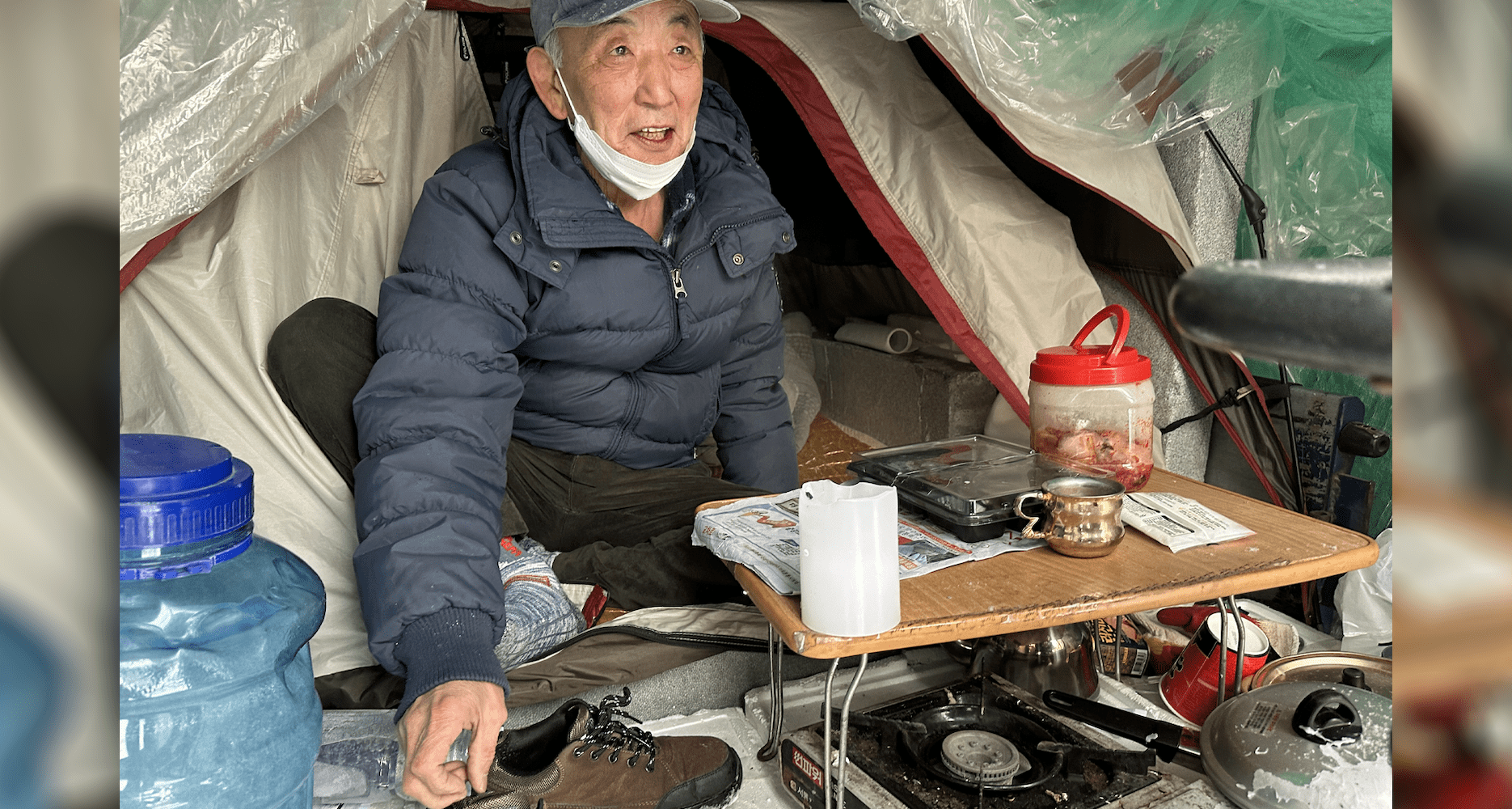 Lee points to the fine he was told to pay for refusing to leave his own home | Image: Korea Pro THE BROADER PROBLEM Experts told Korea Pro that developers lack sufficient consideration for Seoul residents like Lee and that the rights of long-term residents in neighborhoods like Ahyeon are often overlooked. When then-mayor Lee Myung-bak — who later became president — designated Ahyeon for reconstruction, he promoted it as different from conventional projects. Lee focused on the broader “public interest” benefits reconstruction would bring, Park In-kwon, a professor of environmental studies at Seoul National University (SNU), said. “But in fact, alternative housing measures for tenants were not fully considered,” Park continued, leading to the aforementioned suicide of one of Lee’s neighbors. “This [suicide] represented the desperate situation the project had put low-income tenants into. It is challenging for them to go elsewhere unless housing measures are provided,” Park said. Though some public funds had been earmarked for building new roads and parks in the redeveloped area, none had been assigned for alternative housing for the original residents, Park said, leading to the “unavoidable situation” residents like Lee face. The problem isn’t just limited to Ahyeon, however, as the U.N. Special Rapporteur Leilani Farha noted. Even though there have been some improvements, South Korea’s “current legal framework for urban redevelopment and reconstruction does not comply with internationally recognized human rights standards and continues to result in forced evictions,” Farha said. Broadly speaking, South Korea’s approach to reconstruction and redevelopment is similar to land reclamation, said Park of SNU. Redevelopment projects, Park continued, destroy the residential and regional ecosystem, with data showing the rate at which original residents return to the redeveloped area — defined as the resettlement rate — is only about 20 to 30%. 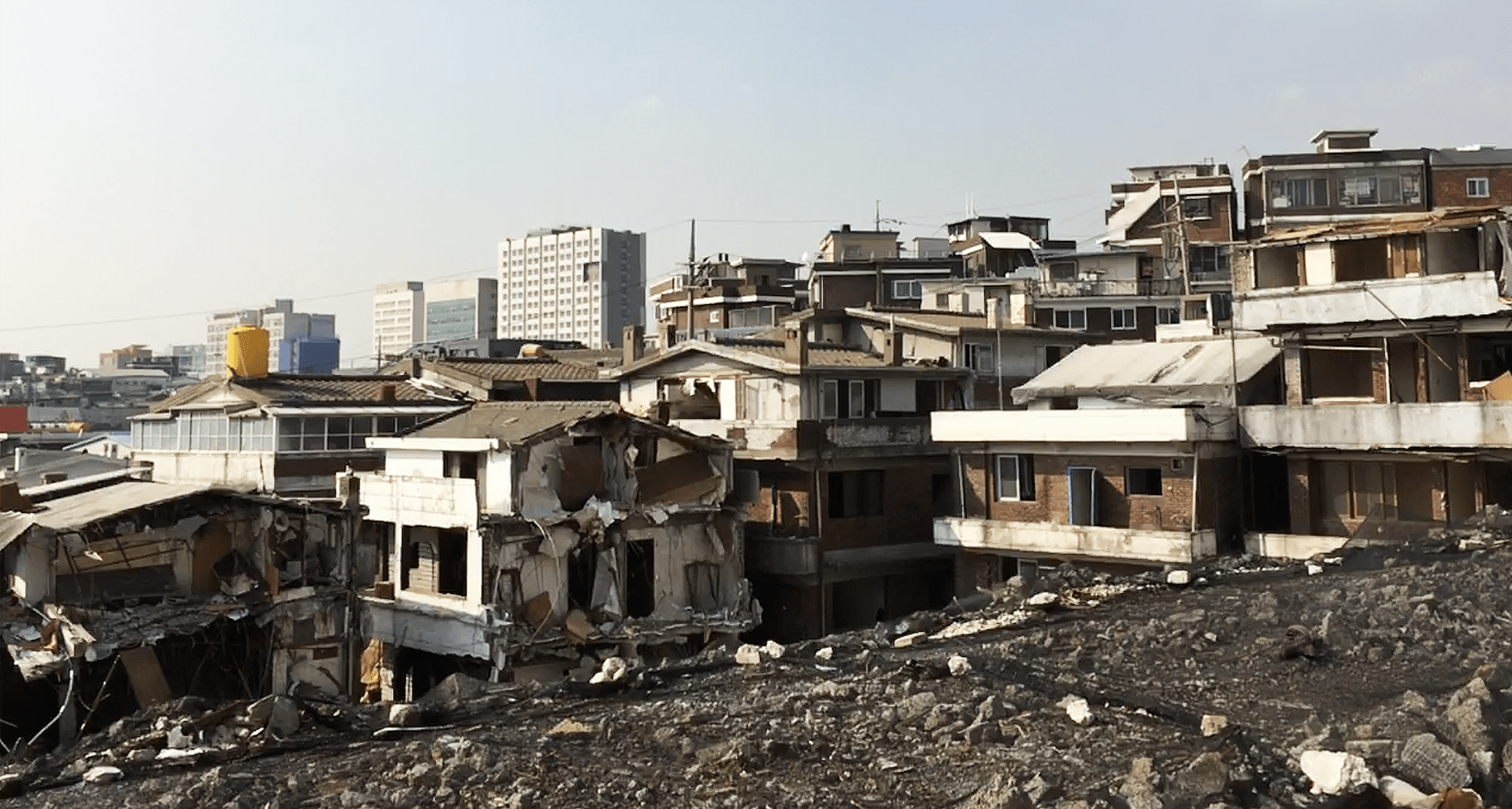 Older houses near Lee’s Ahyeon townhouse being demolished in March 2017 | Image: Korea Pro The reason for this is twofold: For one, cash compensation is often meager for those who owned land and property taken for redevelopment. Former tenants find it challenging to afford a new apartment unit in the exact location where their homes had been, even if offered at preferential rates, Park said. And for renters, the price hike following redevelopment is so significant that they often have no choice but to move to “another poor residential area.” The limited rights afforded to landowners and renters in areas marked for reconstruction in South Korea go directly against the Office of the United Nations High Commissioner for Human Rights (OHCHR) recommendations published in 2014. The OHCHR suggested that residents should be offered adequate alternative housing, emphasizing that forced evictions should not result in homelessness. 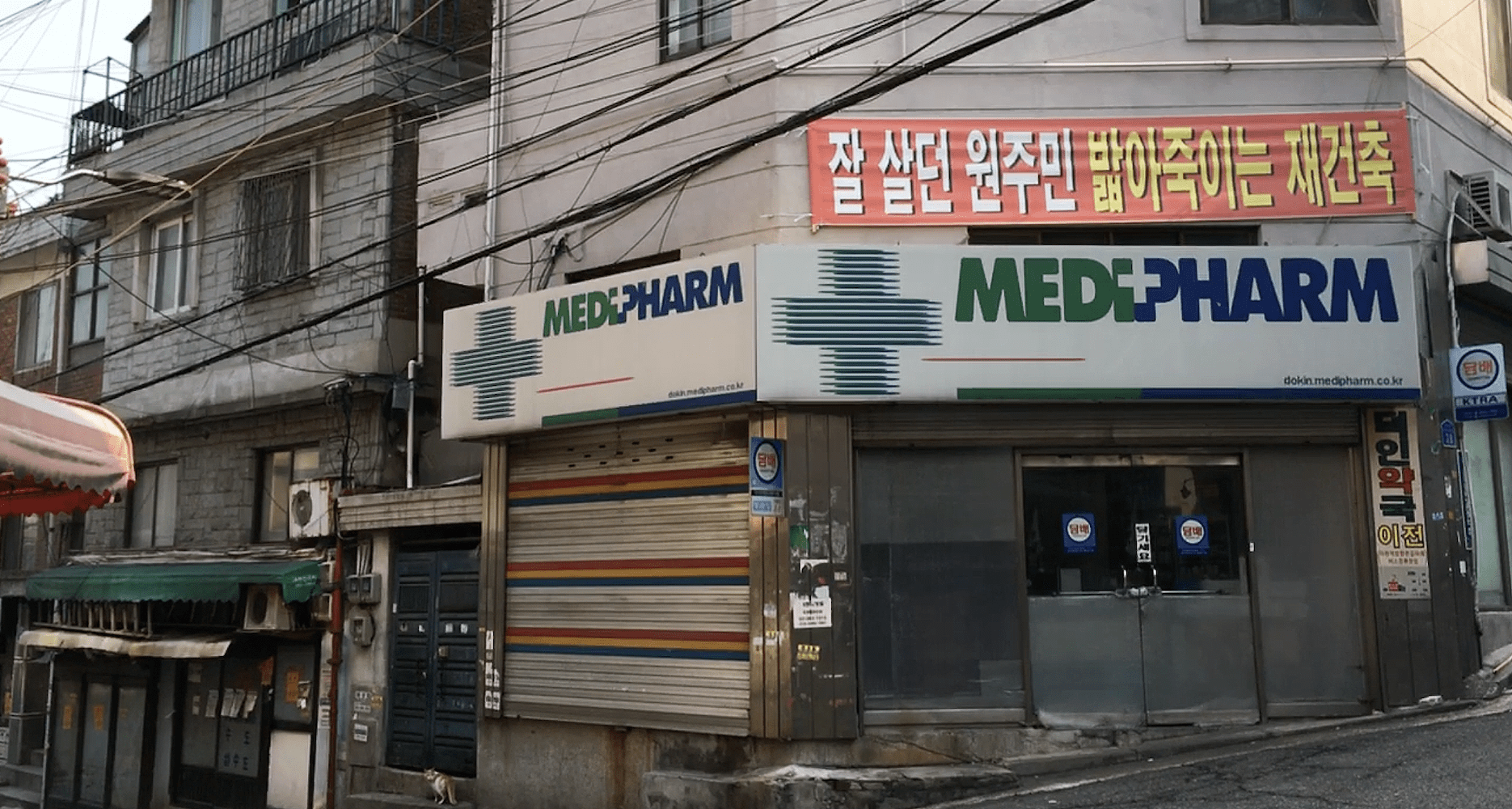 A sign in Lee’s neighborhood before demolition says that the reconstruction project stomps on the rights of residents living in the area | Image: Korea Pro, March 2017 The impact of the Ahyeon reconstruction project on Lee goes against these recommended international standards. As part of a minority of the property owners who protested against the reconstruction project, Lee was not given a better option than accepting the cooperative’s “take-it-or-leave-it” cash offer. Notably, South Korea is one of just a few countries that evaluate land and property based on pre-development market value. And it’s this that results in the low levels of compensation original residents like Lee are offered. Lee Kang-hoon, a lawyer and a member of People’s Solidarity for Participatory Democracy, told Korea Pro that he sympathized with residents like Lee: “I understand these complaints because they should be provided with support for the housing relocation, but they are not receiving it.” 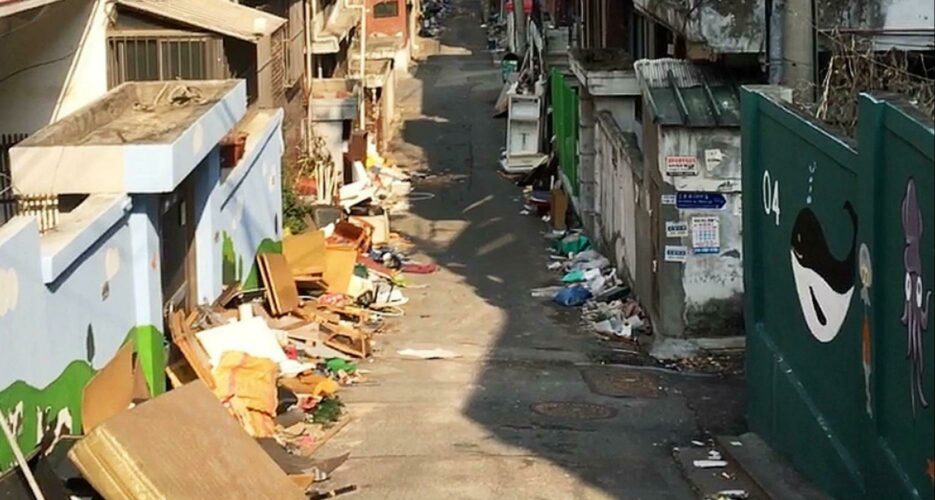 A sign in Lee’s neighborhood before demolition says that the reconstruction project stomps on the rights of residents living in the area | Image: Korea Pro, March 2017 LOOKING FORWARD Stories like that of Lee and the Ahyeon neighbor who committed suicide are reminders that South Korea’s laws are insufficient to protect the rights of some of the most vulnerable members of society. Before leaving the country in 2018, U.N. Special Rapporteur Farha said addressing the topic of forced eviction in South Korea was urgent because it “is considered a serious violation of international human rights law.” Lee — the lawyer — told Korea Pro he agreed that it was clear that South Korea’s approach to forced eviction didn’t meet international standards. But he said that until new legislation is introduced, there is little that can be done, even though South Korea has an obligation to “meet human rights standards.” Looking forward, U.N. Habitat guidance dating back to 2014 offers policy recommendations that could help limit the scale of consequences emanating from forced evictions in South Korea. “The calculation of compensation should include other aspects and not be solely based on the mere market value of houses and shacks that the persons inhabit,” the guidance reads. In particular, it also stresses that those pushed out should be given compensation that replaces the cost of the house and allows people to “rehouse themselves adequately.” And further, it states that if land has been lost, “the evicted should be compensated with land commensurate in quality, size and value, or better.” Meanwhile, SNU professor Park says, “If tenants are not given alternative housing options, then the city may have to pressure the construction [company] to build additional rental houses.” Asked what Seoul is currently doing to help citizens in areas marked for reconstruction and redevelopment, Seoul mayor Oh Se-hoon — in office again after being mayor between 2006-2011 — told Korea Pro in February that the city provides “public rental houses” and “other methods” for those displaced — without going into detail. “But I want to make it clear that the city does not demolish and rebuild without thinking about consequences and want to clarify that the city supports the socially neglected,” Oh added. 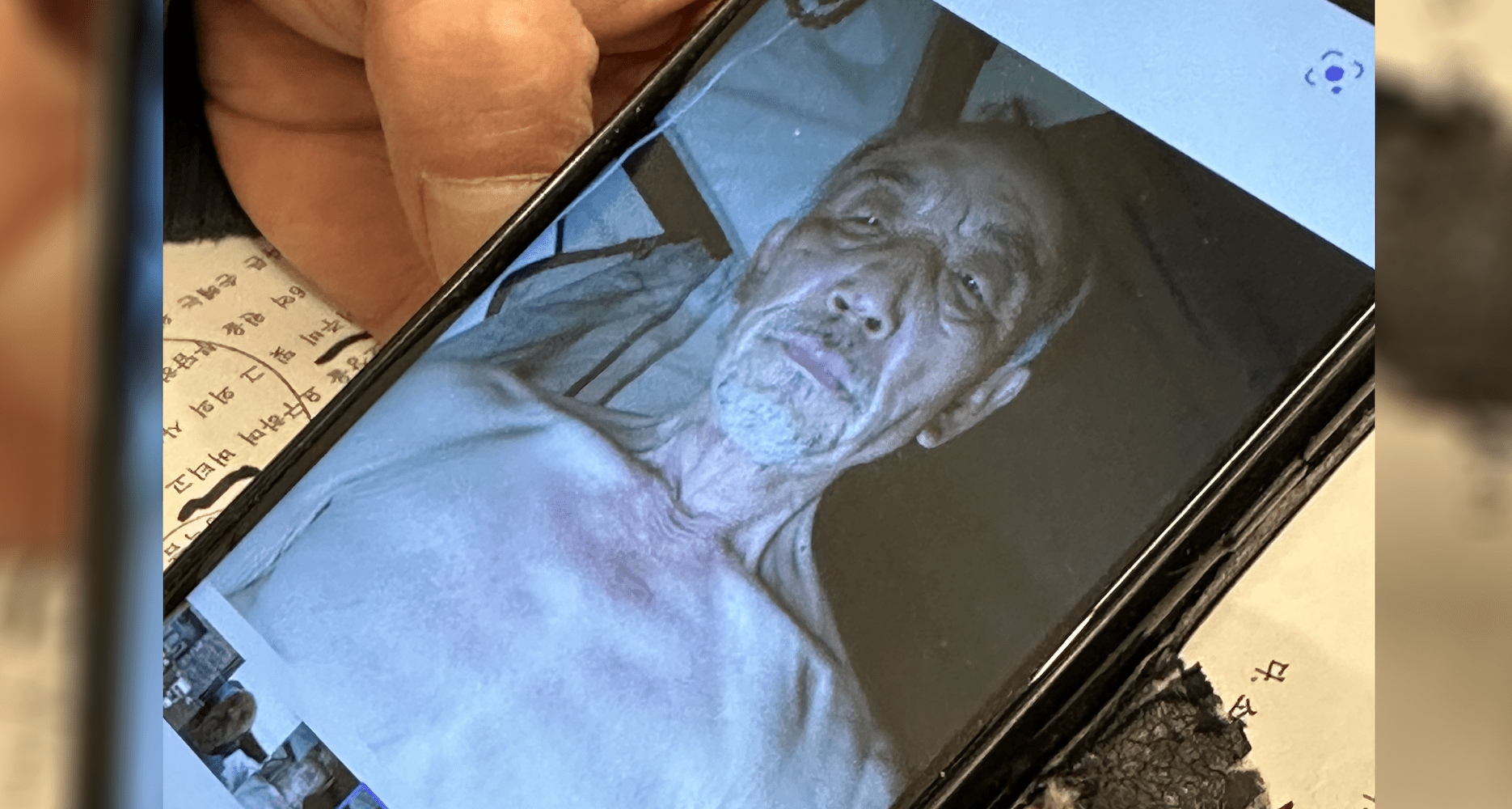 Lee shares with Korea Pro a picture of himself during his hunger strike in May 2021 | Image: Korea Pro Asked what he wanted, protestor Lee said he expected much more support for the original tenants of the area. “I think it’s important that the government makes sure that all the original residents are given proper alternative housing,” he told Korea Pro. “If they think the value of the new apartment and the property don’t add up, they can provide leasing contracts for them.” Above all, he said, original residents must be “given some kind of housing at the end, somewhere they can move and that is not worse than where they used to live.” For now, though, he doesn’t know what else to do. “I just want to say that this whole system … the law … and everything is so unfair. How could they just do this to an innocent, ordinary citizen?” Edited by John Lee © Korea Risk Group. All rights reserved. 
|

September 17, 2026Sep 17, 2026

Never be sidelined again
 SHARE
SHARE COPY LINK
 X
X MASTODON