
  
Analysis In South Korea, trauma scene cleaners mop up lonely deaths and profitsMore people are dying alone without anyone knowing, and a growing number of businesses help make bodies disappear 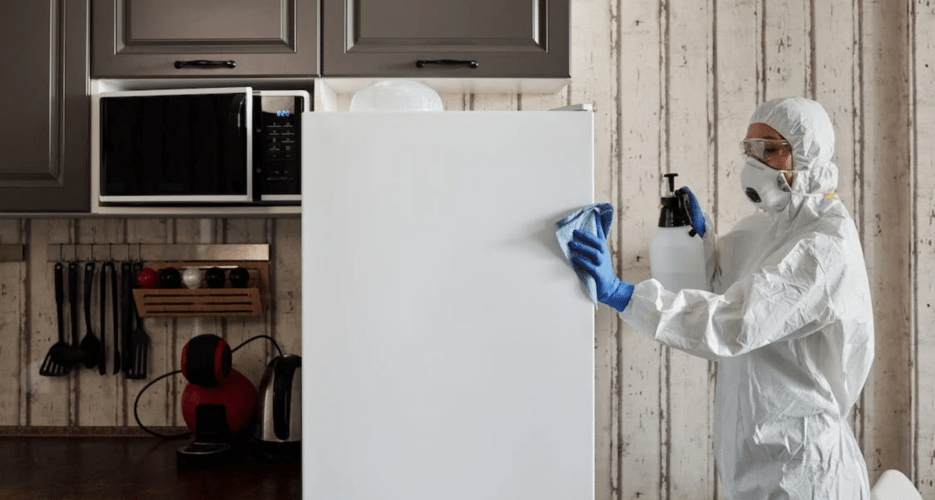 Crawling maggots, swarms of flies. Bodily fluids and rotting flesh. When Kim Sae-byoul goes to work in his black hazmat suit, he often faces the aftermath of one of South Korea’s most morbid trends: lonely deaths. Kim is among an increasing number of cleaners paid by grieving families or desperate landlords to remove any traces of death from a property within which its occupant has died, often alone and unnoticed by neighbors or loved ones for days. Trauma-cleaning business owners estimate that the number of businesses specializing in the industry has increased tenfold to around 100 across South Korea over the past decade. The trend mirrors a sharp increase in the number of people dying alone, according to welfare ministry data and interviews with four top businesses specializing in the grisly trade. “Every night when I close my eyes after work, I can’t help reflecting on their lives, based on what they left behind at home,” Kim told Korea Pro. The report South Korea’s welfare ministry published late last year was its first report on the growing phenomenon. The report defines a lonely death as the death of someone who passed away, unnoticed and isolated from their families, of ailments such as illness, suicide or old age. The ministry’s report stated 3,378 people died lonely deaths in 2021. That number has risen over the past five years and is around 40% higher than in 2017. Trauma cleaners interviewed by Korea Pro pointed to alcohol, mental illness and extreme economic difficulties as significant factors. “All I see are piles of empty cup noodle containers and wooden chopsticks scattered among debt collection letters,” said Kim. “I’ve even seen many cases recently where people died of starvation.” 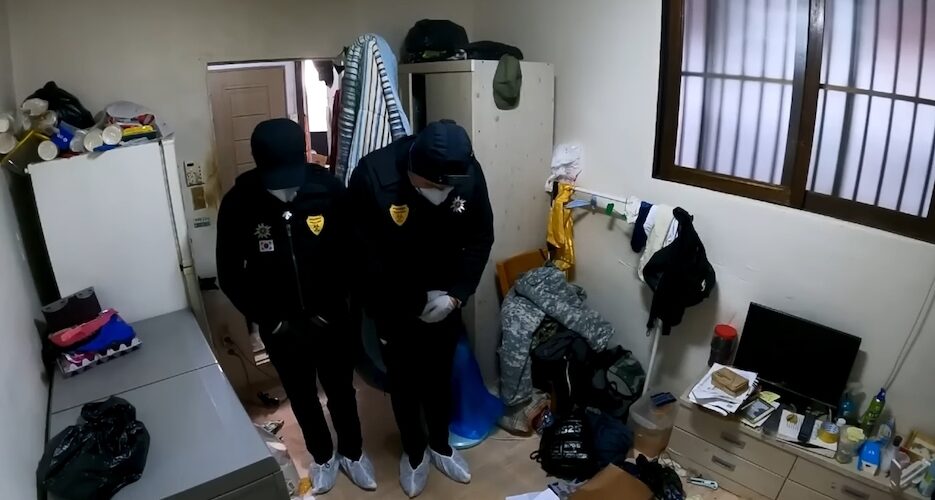 Trauma cleaners paying their respects before starting their work | Image: Hyojin Kim ROTTING BODIES Gil Hae-yong is another cleaner. He was among the first to recognize a business opportunity amid the gruesome phenomenon. He has grown his business from a one-person operation into a growing enterprise that now employs 17 people. “Yesterday alone, I went to three death scenes,” said Gil, who sometimes sleeps in a tent in the corner of his office so he can handle the workload. “It’s usually illness or alcohol that kills them,” he explained. “They’re often surrounded by dozens or hundreds of soju bottles.” Gil started his business, Sweepers, in 2011 and now spends his weekends interviewing prospective franchisees. Each month, he and his team handle 30 to 40 cases. “There were hardly any other trauma scene cleaners when I started this job. There were maybe around 30, five years ago. Now, you can easily find 300 that clean up lonely death scenes,” said Gil. The work is not for the faint-hearted. Cleaners deploy special machines to control the smell. When a person’s flesh has turned to fluids, it can seep into wooden floors and even the concrete beneath. Clean-up costs vary depending on the severity of the decay and can cost thousands of dollars. Each job takes a minimum of three to four days, and the pay can be lucrative, but the job brings immense mental strain, the cleaners report. Even after the horror of scraping up another person’s remains from the floor has faded, some scenes remain stained on their memories forever. “One time, we found a body after they had been dead for a month. There was so much bodily fluid we had to scoop it out with a dustpan,” said Kim, whose company Biohazard has been in the business for around 15 years. The dead are often isolated and estranged from their families. Meeting those bereaved families can often be just as traumatic, not because of their sense of loss, but because many do not seem to care. “A man’s siblings suddenly turned up in farm boots. Brothers who were never there for the deceased were now rifling through their belongings looking for cash and deeds to the house,” Kim said. “They couldn’t find anything and grew suspicious of us,” he continued. “I asked them to take a photo of their parents, but they refused and threw it over our truck. I insisted they at least take the photo out of the frame. That was when we found cash and the deeds stashed away within.” The brothers took the cash and deeds but left the photo, said Kim, who wrote about his experiences in a book retold in the 2021 Netflix series “Move to Heaven.” 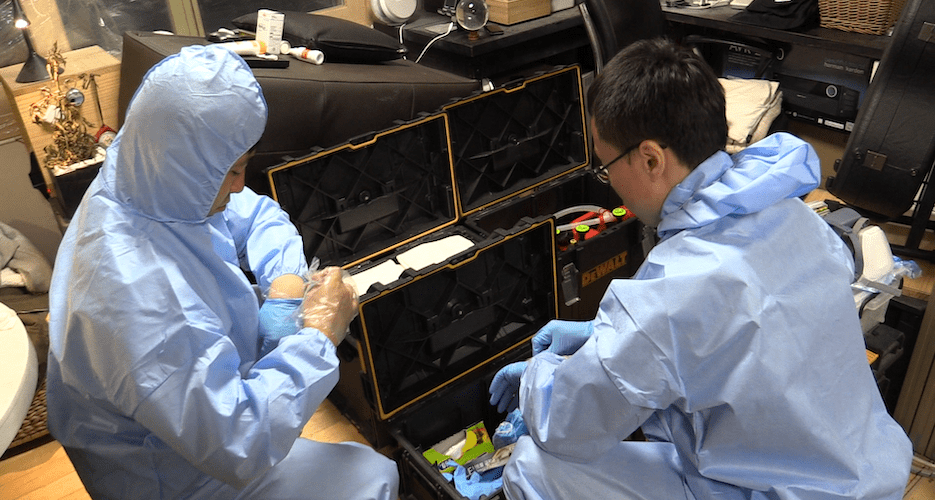 Trauma cleaners getting ready before they begin cleaning a deceased person’s home | Image: Hyojin Kim SUICIDE While most cleaners deal with the remains of middle-aged or older people, there has been a worrying increase in the number of people in their 20s and 30s, they said. Before the pandemic, that age group accounted for around 30% of cases. Since COVID-19, that number has risen to about half. The welfare ministry report found that suicide accounts for 16.5 to 19.5% of all lonely death cases over the past five years. Of those, more than half were in their 20s and about 40% were in their 30s. Cleaning companies blamed poor job prospects and depression as factors. “I’ve seen many lottery tickets at suicide scenes,” said Kim. Accumulated debts caused by gambling addiction and failed cryptocurrency investments are other reasons for suicide in those groups, Gil added. Some experts say that the rise of single-person households has contributed to the increase in lonely deaths. That rise has brought a more individual-oriented lifestyle and a breakdown in traditional bonds between family members, according to Song Jae-ryong, a sociology professor at Kyunghee University. “Family unity and collectivism used to be one of the driving forces of post-War Korea, but since the late 1990s, family and community breakdowns have accelerated with the rise of individualism,” Song said. “It happened at such a pace that the public sector had no system to provide psychological support to each individual’s sense of loss.” WEIGHED DOWN While Sweepers’ Gil and Biohazard’s Kim were among the first generation of trauma scene cleaners in South Korea, they have seen many new businesses enter the industry as the scale of the problem grows, forcing them to diversify to stay competitive. “The competition would have pushed me out if I had stuck to a simple cleaning service,” said Gil. He is now consulting with the state-run Korea Land & Housing Corporation to design a lonely death insurance program covering the clean-up cost for public housing residents. For Kim Sae-byoul, however, the prospect of making more money from other people’s misfortune has started to weigh on him. “I feel uncomfortable profiting from death,” he said. “I am not sure if I should continue doing this.” Edited by John Lee © Korea Risk Group. All rights reserved. 
|

September 17, 2026Sep 17, 2026

Never be sidelined again
 SHARE
SHARE COPY LINK
 X
X MASTODON