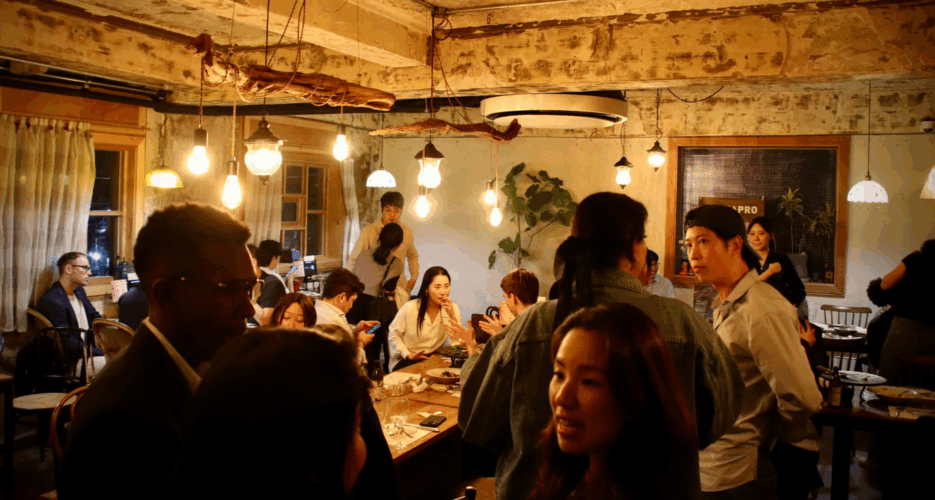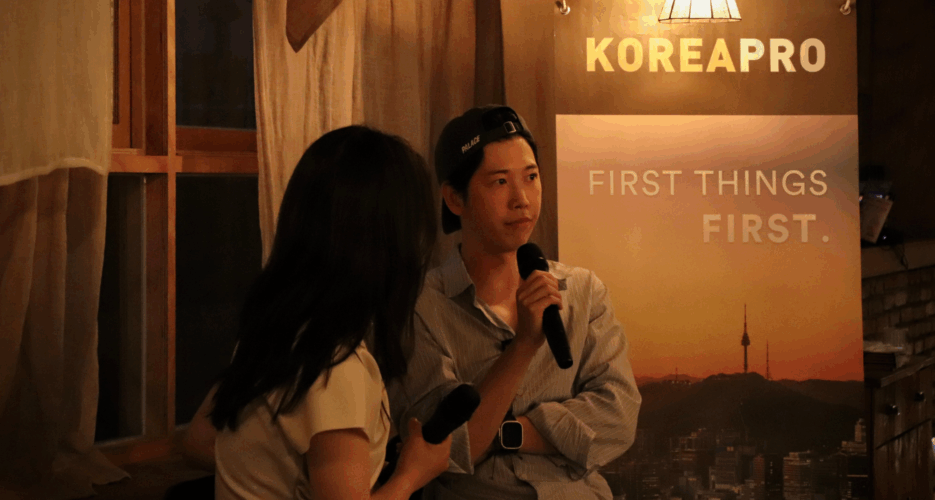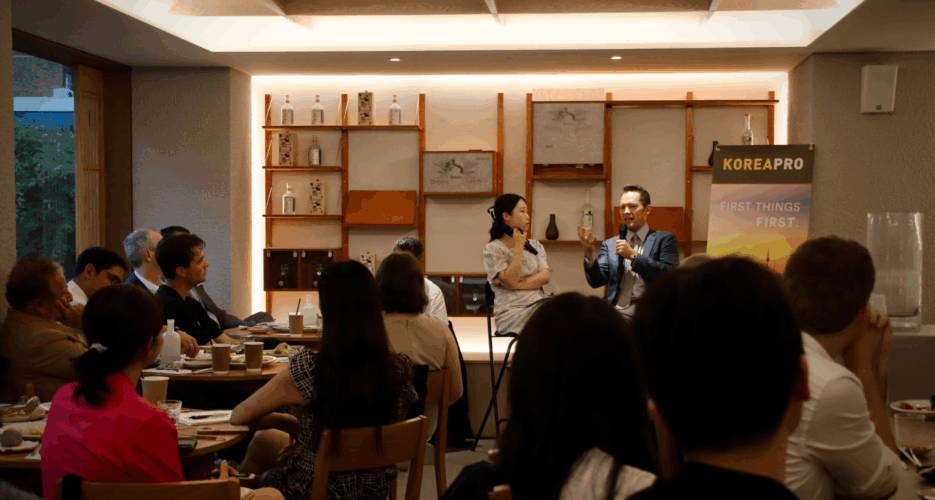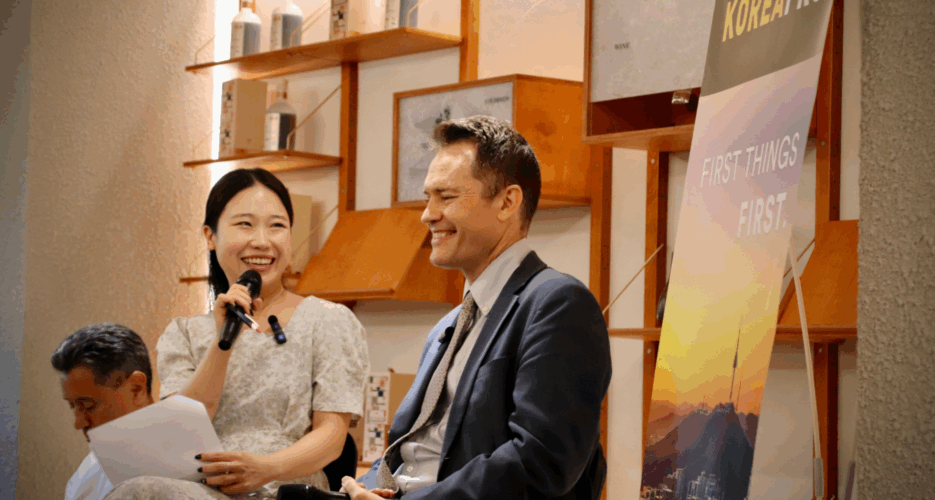
Feature Experience exclusive intelligence at Korea Pro’s discussion forumsAttend dinner and breakfast sessions designed to dismantle consensus and reveal underlying systemic risks  Some conversations matter because they take place before positions are finalized, risks are fully priced in, or narratives harden into certainty. Over the past year, Korea Pro convened such discussions at precisely those moments — when political authority was unsettled, regulatory intent was still ambiguous and executives were being forced to make decisions without the comfort of precedent. These conversations unfolded across two distinct formats. Seoul Circuit, held monthly over dinner and drinks, is the entry point. Its rooms bring together paid subscribers, first-time attendees and invited guests who may have no prior relationship with Korea Pro. Korea Business Forum, held monthly over breakfast at five-star hotels, is invitation-only and reserved for Korea Pro’s institutional members and senior clients. What unites both Korea Pro events is that they are governed by the Chatham House Rule, allowing ideas to circulate freely while protecting attribution. The result is a working room — one where assumptions are tested, sometimes uncomfortably, before they are tested by markets, courts or governments. Attendance is limited to preserve candor, and participation is curated to ensure that discussions remain operational rather than performative. The moments below capture how some of those conversations unfolded this past year, while uncertainty was still active. 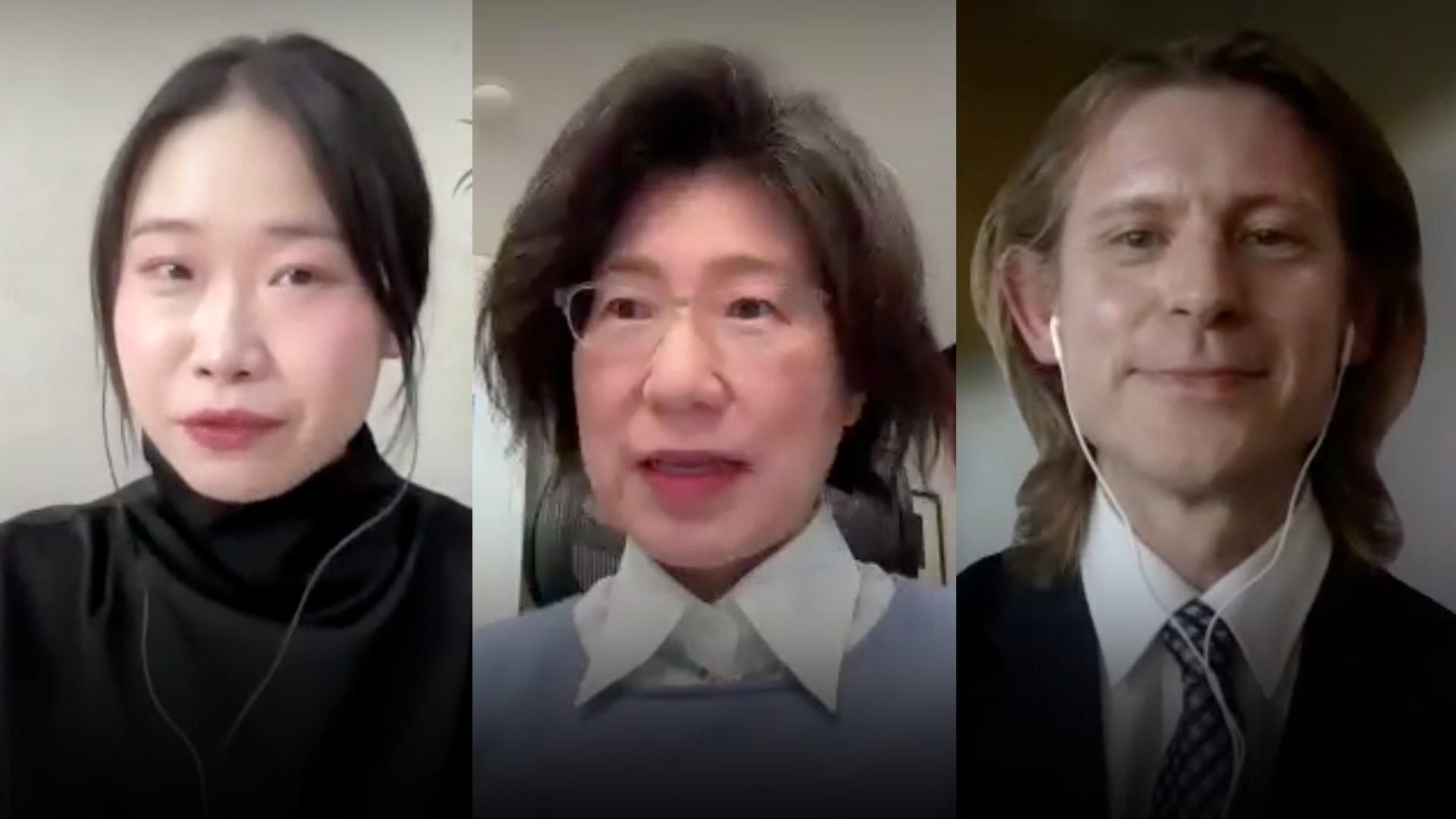 Jeongmin Kim, Cho Hee-kyoung and Erik Mobrand speak during a Korea Pro webinar, April 4, 2025 | Image: Korea Pro LEGAL RULING WITHOUT POLITICAL CLOSURE Just hours after South Korea’s Constitutional Court unanimously upheld the impeachment of Yoon Suk Yeol, Korea Pro convened a special online briefing. Opening the session, Korea Risk Group Executive Director Jeongmin Kim highlighted the court’s unusually blunt finding that Yoon’s actions constituted “a great betrayal of the trust of the sovereign people.” Legal scholar Cho Hee-kyoung argued that the court’s insistence on unanimity was aimed less at legal necessity than at limiting further political rupture, likening democratic institutions to “plumbing” that must function quietly in the background. Political scientist Erik Mobrand cautioned against treating polarization as a fixed condition, stressing that democratic stability hinges on choices made under pressure. The three speakers agreed that while the ruling closed a legal chapter, it left open a volatile political one — defined less by constitutional text than by how political actors would choose to test its limits. 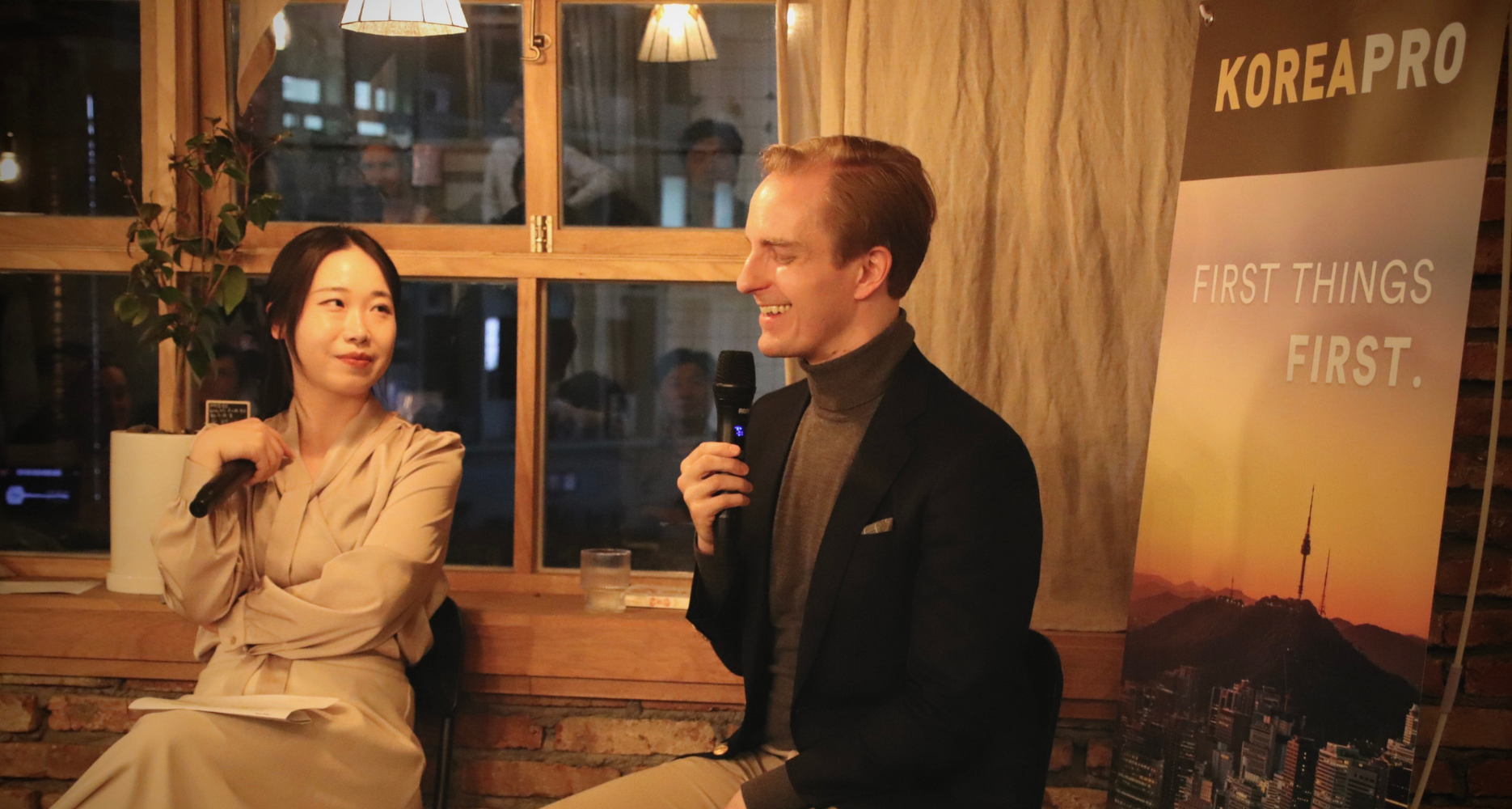 Colin Marshall and Jeongmin Kim speak during a Seoul Circuit dinner, April 30, 2025 | Image: Korea Pro LEFT, RIGHT AND THE LIMITS OF IMPORTED LABELS At an April Seoul Circuit dinner near Gwanghwamun, a question familiar to foreign observers resurfaced: do “left” and “right” actually explain Korean politics? The discussion was led by essayist Colin Marshall, who argued that using ideological labels imported from U.S. and European contexts to understand Korean politics more often than not leads to “hopeless distortion.” Alignment in Korea, he suggested, is shaped less by policy coherence than by perceptions of loyalty, threat and power. As the conversation moved off the record, fault lines emerged. Some participants defended ideological shorthand as a useful organizing tool. Others countered that it actively distorts analysis, particularly in moments of crisis. Attention shifted to protest movements and political media as mechanisms that shape how political identity is formed and mobilized. The dinner did not resolve the question. It made it harder to answer casually.
BUILDING A STARTUP WHEN THE NARRATIVE BREAKS DOWN Another Seoul Circuit dinner in May focused on a question rarely addressed in policy or corporate forums: what it actually takes to build a startup in Korea that can survive. Keon Jun Lee, co-founder and CEO of Brandazine, spoke candidly about moving from a failed first venture to building a creator-commerce platform linking more than 500 brands with 5,000 creators. Participants pressed on hiring discipline, capital allocation and what “moat” really means when valuations collapse and exit timelines stretch. Several noted that the hardest decisions are rarely about vision, but about sequencing — when to hire, when to cut and when to accept that certain paths are no longer viable.
READING CHINA’S SIGNALS — AND THE COST OF MISREADING THEM At a July Seoul Circuit dinner, attention turned to China. Historian John Delury, recently returned to Seoul after two years in Rome, framed the discussion around Beijing’s repeated pattern of deliberate engagement with every new South Korean administration, regardless of ideology. Delury described Chinese leader Xi Jinping’s decision to invite ROK President Lee Jae Myung to attend Beijing’s Victory Day parade as “friendly pressure,” suggesting that it could lead to a personal relationship between the two leaders, but only if Lee was willing to take big risks. Participants disagreed on where engagement ends and leverage begins. Some argued that early outreach buys time and optionality; others warned that it locks leaders into optics that are difficult to unwind. By the end of the evening, the room converged on one uncomfortable point: the danger lies less in misreading China’s signals than in overestimating one’s ability to manage their consequences. 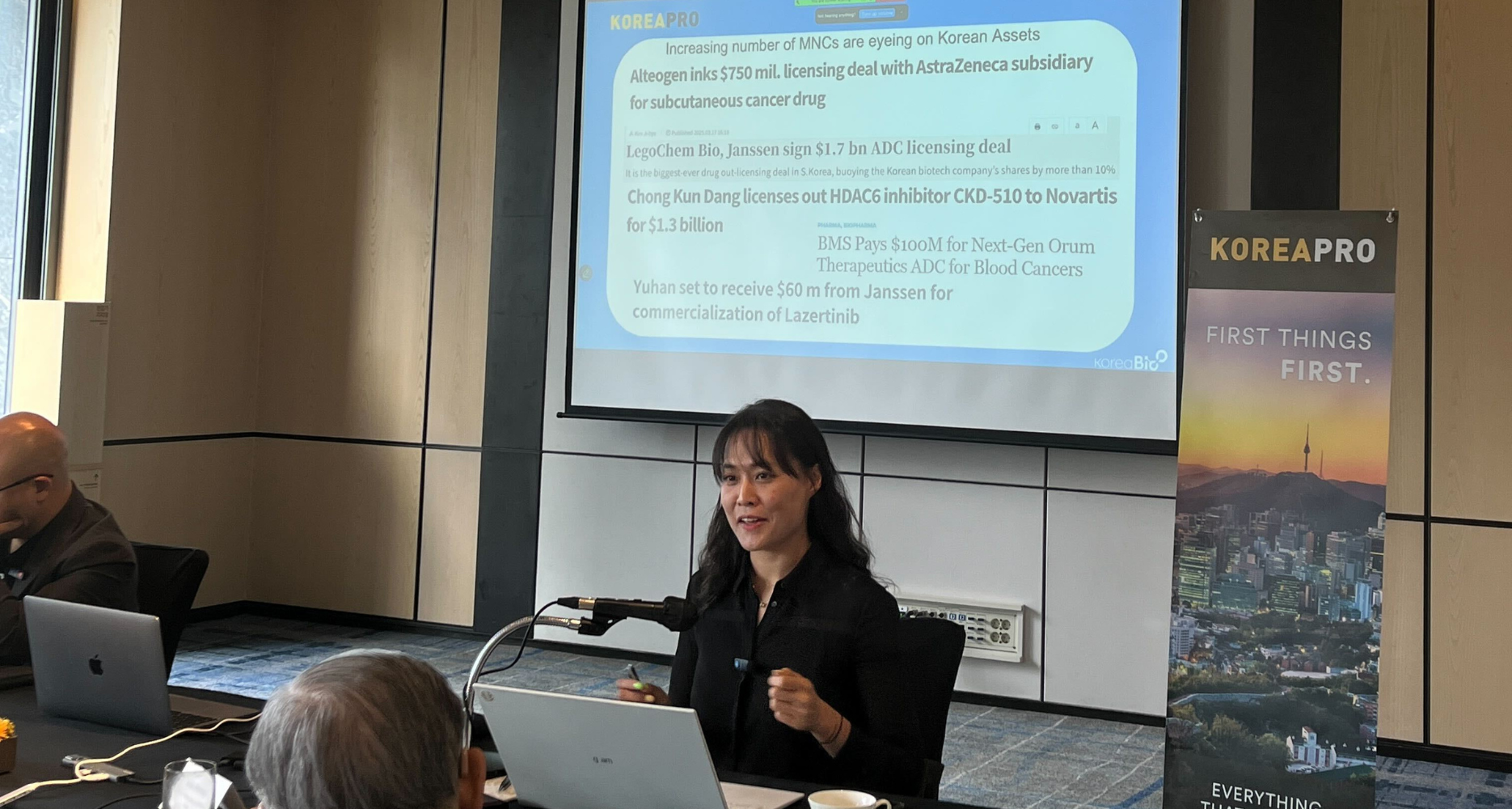 Jurie Hwang speaks during a Korea Business Forum breakfast briefing, May 22, 2025 | Image: Korea Pro BIOTECH AND THE LIMITS OF SCALE At a Korea Business Forum breakfast in May, executives and diplomats gathered around one pressing question: where Korea’s biotech advantage still holds amid regulatory drag and capital retreat. Jurie Hwang, director for international and public affairs at KoreaBIO, anchored the session on first principles. Korea’s strength, she argued, lies less in headline drug discoveries than in manufacturing scale, biosimilars and licensing execution. “Bio is not one industry,” Hwang said. “It is an ecosystem shaped by policy, capital and timing.” Participants weighed FDA versus KFDA incentives, the limits of Korea’s Contract Development and Manufacturing Organization dominance, and whether manufacturing scale can convert geopolitical pressure into durable advantage. 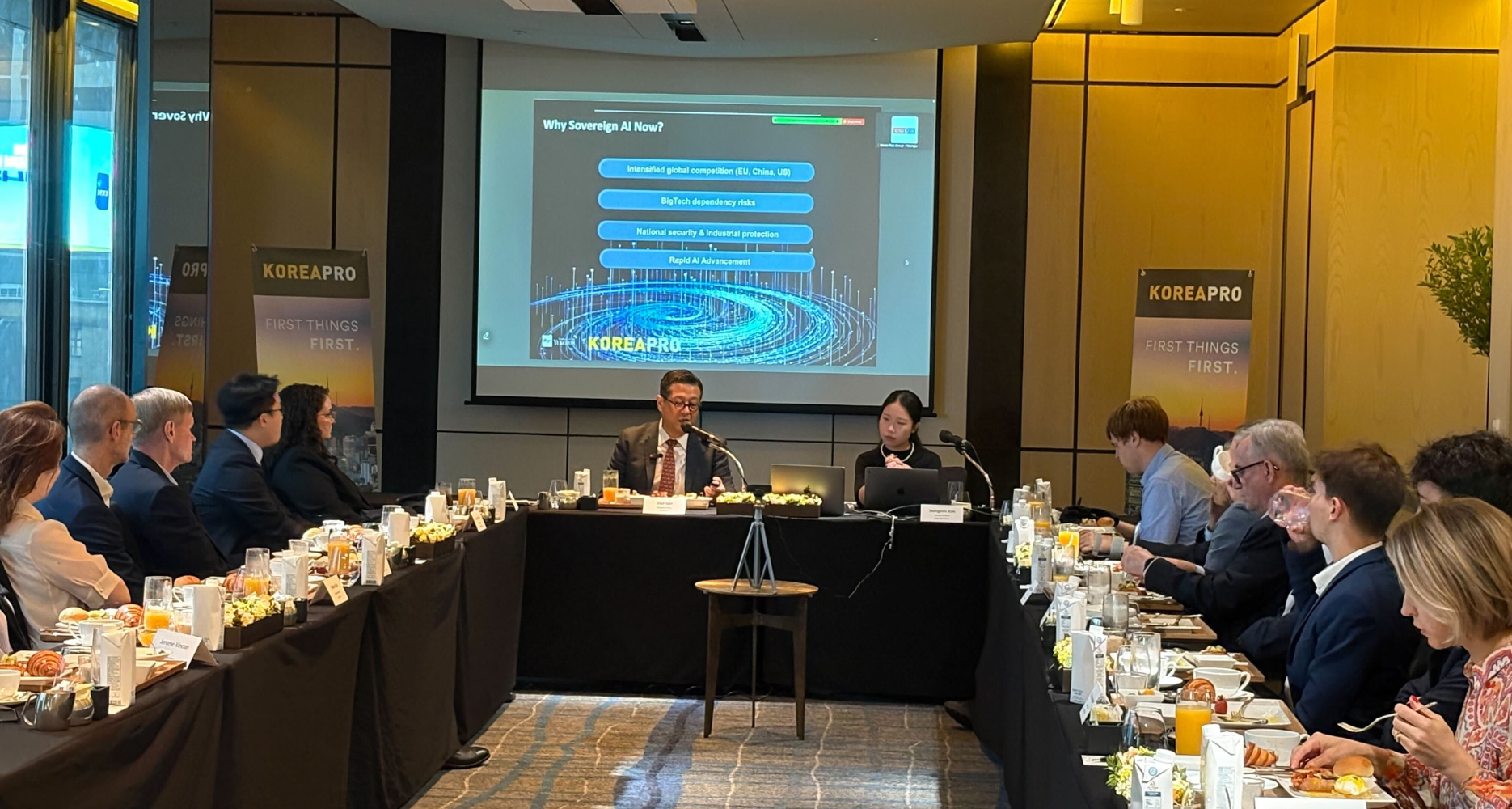 Doil Son speaks during a Korea Business Forum breakfast briefing, July 17, 2025 | Image: Korea Pro DATA RISK AFTER THE BREACH The July Korea Business Forum convened in the aftermath of the SK Telecom data breach, and the discussion focused on what the breach revealed: that data security in Korea has become an operational and liability risk that no longer sits neatly with IT or compliance teams. The session was framed by Son Doil, managing partner at Yulchon, who focused on how Korea’s regulatory regime assigns responsibility. Under current rules, companies can face revenue-based fines even when they are victims of a breach, if safeguards are deemed insufficient. In practice, that means exposure persists even when firms act in good faith. From there, the conversation widened to why this risk is intensifying. Generative AI and cloud dependence were discussed as forces that expand data flows and blur accountability. Participants focused on the growing gap between regulatory expectations and operational reality — particularly for firms without the scale to build extensive governance and security frameworks. The takeaway was blunt: data breaches in Korea are no longer isolated legal events. They are systemic shocks, forcing companies to absorb risk before standards, enforcement or precedent have settled. 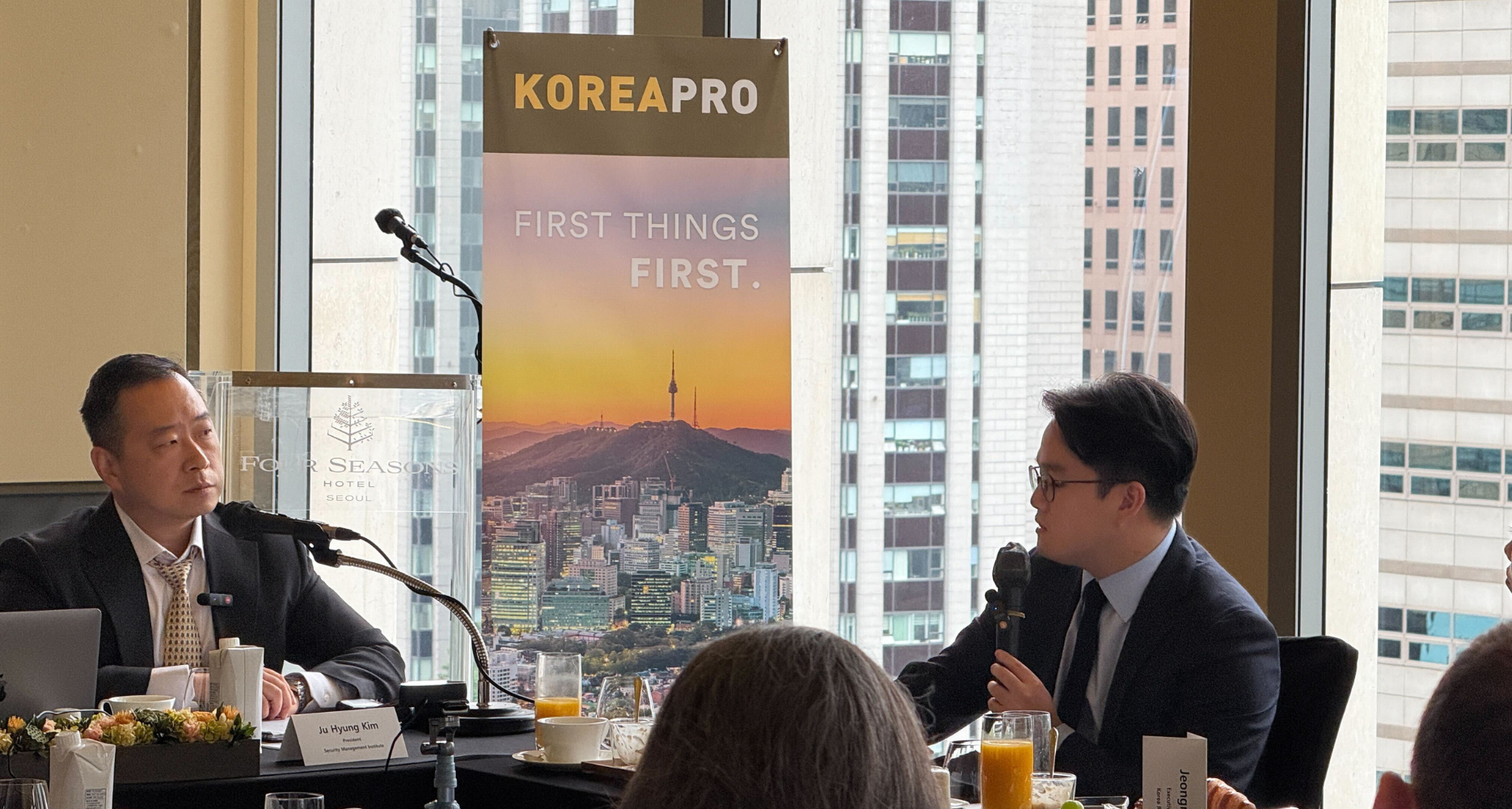 Ju Hyung Kim (left) speaks during a Korea Business Forum breakfast briefing, Sept. 18, 2025 | Image: Korea Pro ALLIANCE ASSUMPTIONS UNDER COMPRESSION By midsummer, discussion of the U.S.-ROK alliance had shifted toward practical constraints. The session was led by Ju Hyung Kim, president of the Security Management Institute and an adviser to South Korea’s National Assembly, who drew on internal debates within the defense and intelligence community. His central point was straightforward: alliance credibility is shaped less by declaratory policy than by readiness, timelines and available assets. Participants examined specific pressure points — missile defense coverage gaps, the pace and conditions of wartime operational control transfer and the tradeoffs imposed by constrained defense budgets. The discussion was pragmatic rather than alarmist, with attention focused on whether alliance adaptation is keeping pace with changes in North Korean capabilities and regional contingency planning. There was little disagreement in the room about intent or alignment. The uncertainty centered on capacity — and whether existing assumptions about response speed and coordination remain valid under stress. 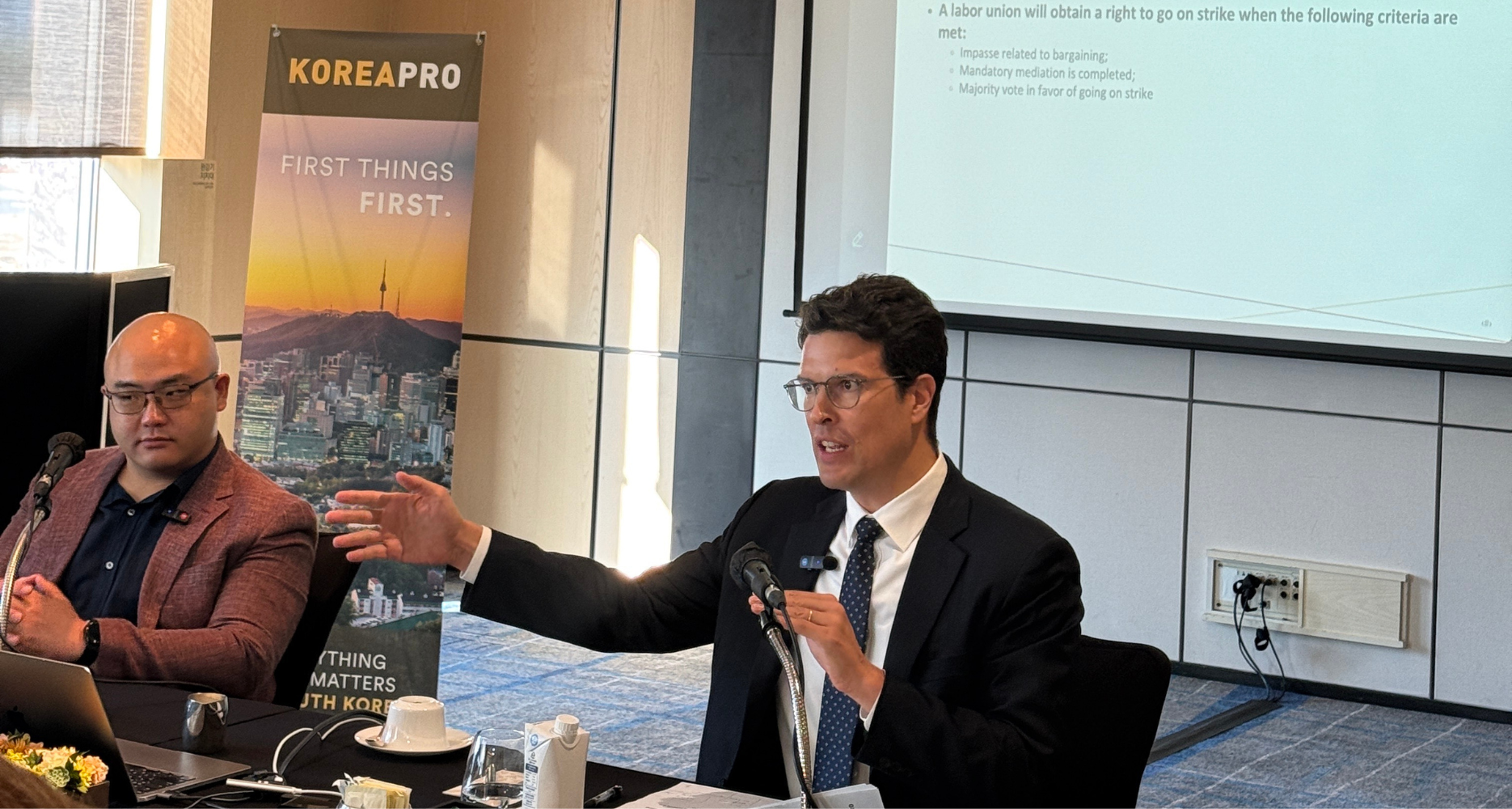 Matthew Jones speaks during a Korea Business Forum briefing, Oct. 16, 2025 | Image: Korea Pro LABOR LAW AND CASCADING EXPOSURE By October, the Korea Business Forum turned from macro uncertainty to a more immediate fault line: how the Yellow Envelope Law could redraw operational risk across entire supply chains. With implementation approaching in March 2026, the discussion was no longer about legislative intent, but about exposure — and how quickly it could spread. The session opened with a structural overview from Matthew Jones, an attorney at Kim & Chang, who outlined how expanded definitions of “employer,” broader strike protections and limits on damage claims could upend long-standing assumptions in Korea’s subcontracting and outsourcing models. What sharpened the room was enforcement uncertainty. Executives tested scenarios across logistics, manufacturing and services, tracing how liability could cascade from subcontractors to principal firms even without direct employment relationships. Several acknowledged that compliance frameworks built for clearer chains of responsibility may no longer hold. Disagreement emerged quickly. Some argued firms could adapt through tighter contracts and risk pricing. Others warned that ambiguity itself had become the central risk — forcing operational decisions before courts, regulators or political actors provide clarity. By the end of the session, there was no consensus on mitigation. What the room did converge on was a more sobering conclusion: uncertainty was no longer a temporary condition to be managed later, but a cost that would need to be absorbed in real time. WHY WE CONVENE THESE ROOMS The value of Korea Pro’s events lies in timing. By convening early — under the Chatham House Rule — Korea Pro creates space for candid exchange while uncertainty is still active and risks are still being priced. Seoul Circuit is where many first encounter that space. Korea Business Forum is where long-term members return to test assumptions at a deeper, more operational level. These are not panels, presentations or networking exercises. They are working conversations that are designed to stress test friction before it surfaces elsewhere. Information on upcoming Seoul Circuit and Korea Business Forum events is available at events.koreapro.org. Edited by John Lee © Korea Risk Group. All rights reserved. 
|

October 27, 2026Oct 27, 2026

Never be sidelined again
 SHARE
SHARE COPY LINK
 X
X MASTODON